New customers vs. existing customers: What's more useful in B2B?
Summary
There is often a “shiny object syndrome” in sales: The closing of a new customer is celebrated with the bell, while silent sales with existing customers are taken for granted. But does that make economic sense?
The eternal debate “Hunter” (new customers) vs. “Farmer” (existing customers) must be reassessed. Especially in a B2B environment, where there is pressure on margins and complex purchasing structures, the right weighting is decisive for profitability or stagnation.
Let's look at the facts to find the best strategy for your business.
.png)
1. Existing customers: Your sleeping giant
Existing customers are much more than just a “stability factor.” They're often the most profitable part of your portfolio.
- The cost advantage (CAC): It is statistical 5 to 25 times more expensiveto attract a new customer than to retain an existing one. While you first have to amortize marketing and sales costs (customer acquisition costs) for new customers, existing customers deliver margin from day 1.
- Share of Wallet & cross-selling: You know your existing customers. You know what they're buying — and especially what they're buying Not yet buy. This is where the biggest untapped potential lies: upselling. A customer who trusts is more likely to try out a new product category than a cold lead.
- Resilience: In times of crisis, new business often breaks away. Loyalty and long-term contracts protect your cash flow.
2. The new customers: Expensive but essential
Why are we still hunting them? Because without new customers, a company dies in the long term.
- The only way against emigration: Every company loses customers (churn) — whether through insolvency or competition. Without new customers, you automatically shrink.
- Diversification as life insurance: Anyone who rests on three major customers (“cluster risk”) is living dangerously. New customers spread the risk.
- The innovation driver: New customers challenge you. They ask for solutions that you may not yet have and force your company to remain agile and innovative.
3. The fallacy of the “either/or” decision
The biggest mistake in B2B sales is strict separation. The truth is: The lines are blurring.
If you get an existing customer to buy product group B from you instead of just product group A, that is like acquiring new customers — just faster, cheaper and more trustworthy.
The problem: Many sales teams only provide reactive support to existing customers (“waiting to order”).
The solution: Active inventory management. Analyze data to see which customer has potential and treat them like a new customer in terms of sales.
Practical deep dive: This is what active inventory management looks like in wholesaling
In traditional wholesalers, “customer care” often means calling once a quarter and asking if everything is okay. That is no longer enough today. Active management means with the call to know what the customer needs. Here are three specific levers for using data to increase inventory sales:
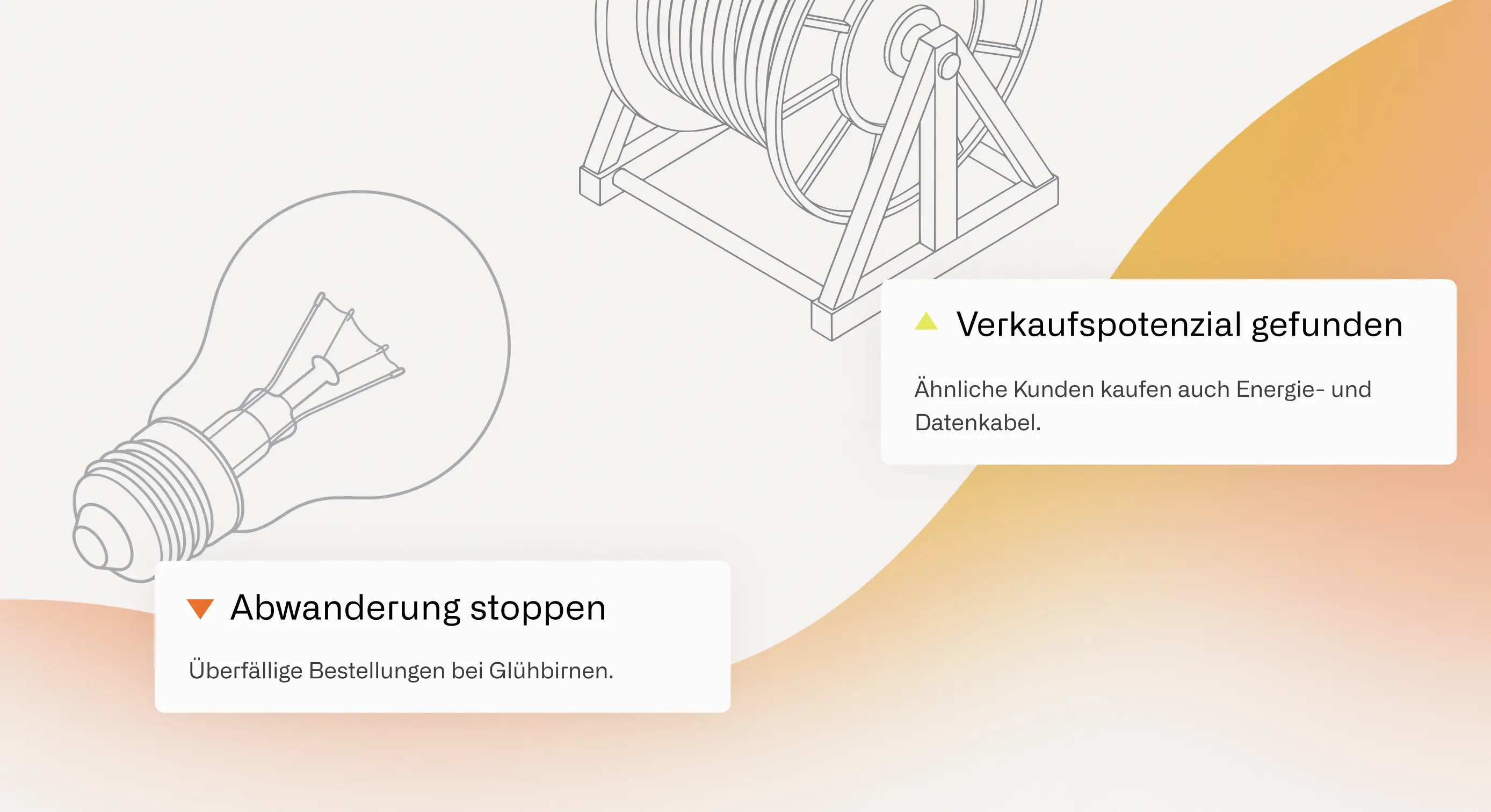
1. Uncover unused potential (cross-selling & white space)
The classic case: A customer has been buying from you reliably for years tools, but the occupational safety He's moving somewhere else. Why Often simply because he doesn't even know that you are offering it — or because the sales representative has never addressed it.
- The passive way: Wait until the customer asks about occupational safety.
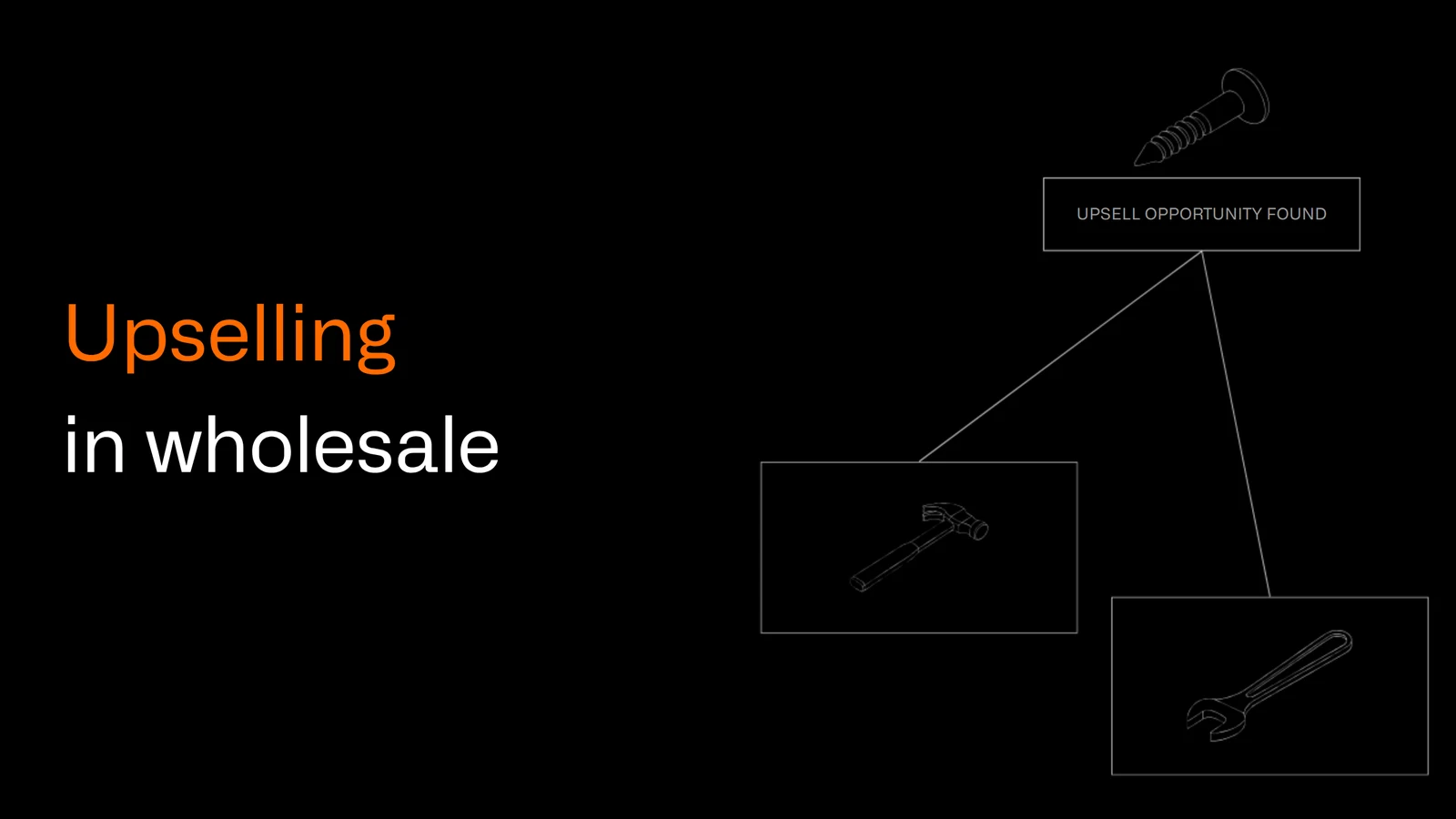
- The active route (as with acto): One Software-based analysis compares buying patterns. She recognizes: “80% of customers who buy similar drilling machines to customer Müller also order these gloves. ”
- The result: Your sales department starts the conversation with a specific suggestion: “Mr. Müller, I see that you have ordered the new drills. Many of our partners use the X gloves for this purpose — should we send them directly? ” That is not “selling”, it is thoughtful service.

2. Stop migration before it happens (churn prevention)
Customers rarely cancel loudly in B2B. They're sneaking out. First, the order frequency drops, then edge assortments disappear, and suddenly the main turnover is with the competitor. When you notice that, it's usually too late.
- The passive way: React when sales plummet at the end of the year.
- The active way: Use warning systems. Intelligent tools sound the alarm when a customer deviates from their usual buying pattern (e.g. “Customer A hasn't ordered consumables for 4 weeks, although they usually do so every 2 weeks”).
- The result: You can call proactively: “We noticed that you didn't need a refill this month. Is everything correct with us or do you still have inventory? ” It is often precisely this call that saves the customer relationship.
3. Enforce price adjustments
Existing customers often have “historically grown” prices that eat up your margin. Many salespeople don't dare to touch them for fear of losing customers.
- The active way: Identify customers who pay too little compared to similar customer groups (peer groups) and use data to help with arguments. Anyone who sees that they are getting excellent service and fast logistics often accepts fair price corrections — if you self-confidently justify them.
Conclusion: Balance through data
The question is not “new customer or existing customer? “, but: “Am I investing my resources where the yield is highest? ”
- Use Acquisition of new customersto gain market share and balance churn.
- Use active inventory managementto maximize profit (profitability).
The most successful B2B companies today use intelligent analyses to identify exactly: Which existing customer has the potential of a new customer? That's where your “sweet spot” is.
.jpg)