AI in wholesale distribution - The best practice examples, use cases and tools for 2026
Summary
- AI has arrived in the wholesale sector. Not as an experiment, but operationally
- Wholesalers should start with focus, not automate everything at the same time
- Sales is the best entry point because impact can be measured quickly
- The most important use cases today:
- Prioritize customers based on revenue potential
- Next Best Opportunity in Sales
- Migration forecast
Wholesale is at a turning point. The era of pilot projects and “let’s take a look at this” is over. The current B2BEST Barometer 2025 speaks a clear language:
63% of wholesalers already classify AI as extremely relevant today. In five years, it will be 85%.
But while investments are rising massively, 74% plan higher budgets for 2026, a dangerous gap is opening between ambition and reality.
The problem: More than two thirds of companies (68%) do not systematically measure the ROI of their AI applications.
Investments are made because “you have to do something with AI”, not because there is a clear business case behind it.
In this article, you will learn why wholesale is predestined for AI, where the real levers lie, and how you can turn AI from a “nice toy” into a measurable profit driver.
Why wholesale is the perfect playing field for AI
Wholesale has three structural characteristics that make machine learning and AI extremely effective:
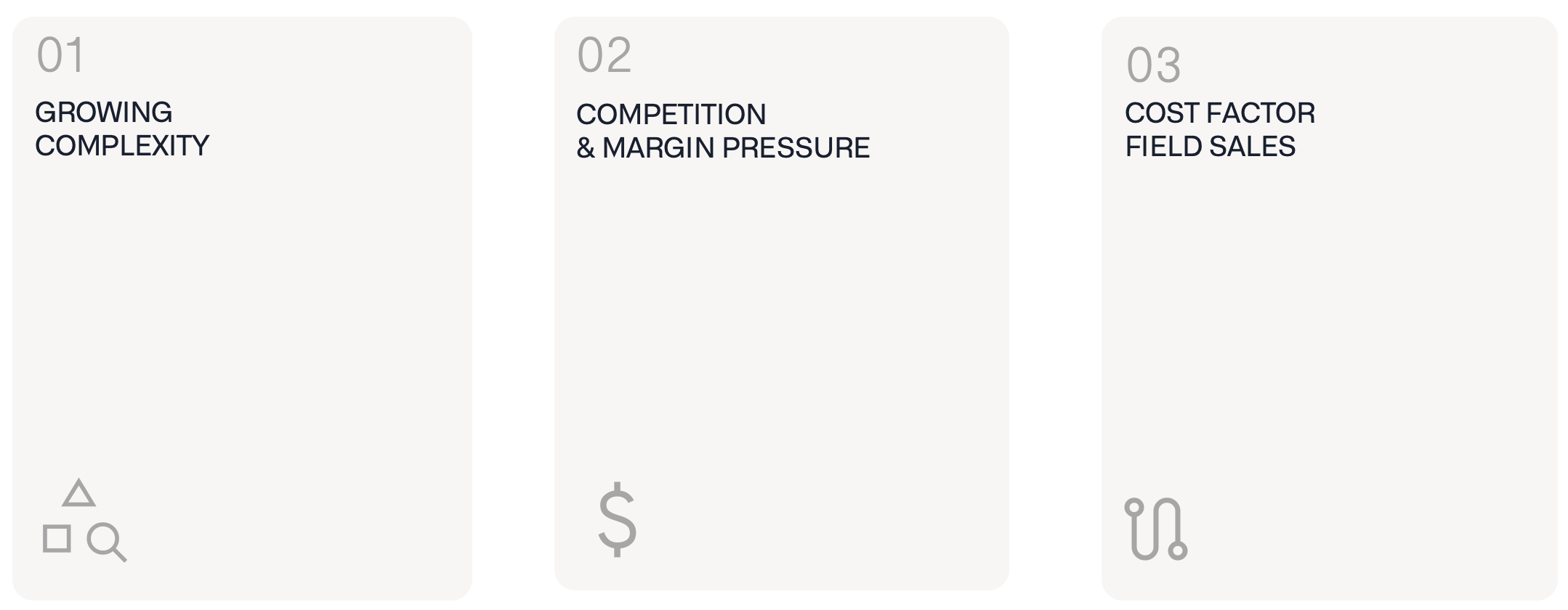
- Massive data volumes: Transaction data, complex assortments, and years of customer behavior. Your gold mine already exists. You just need to mine it.
- Recurring patterns: Order cycles, seasonal effects, and churn signals follow logics that AI recognizes far faster than any analyst in an Excel spreadsheet.
- Decentralized decisions: Every day, your field sales, inside sales, and purchasing teams make hundreds of decisions under time pressure. AI acts as a “co-pilot” that massively increases hit rates.
Status quo: Priorities are shifting
AI has long displaced classic digitalization projects such as social media or content marketing from the top of the priority list. What is interesting is where AI is already being used most intensively today:
- IT security: 75%
- Sales: 72%
- Customer service: 71%
- Logistics: 70%
That sales takes a top position is typical. This is where the direct impact on cash flow is created. Whoever perfects AI supported decision making in this area first secures a significant competitive advantage.
9 practical use cases: Where AI generates real ROI in wholesale
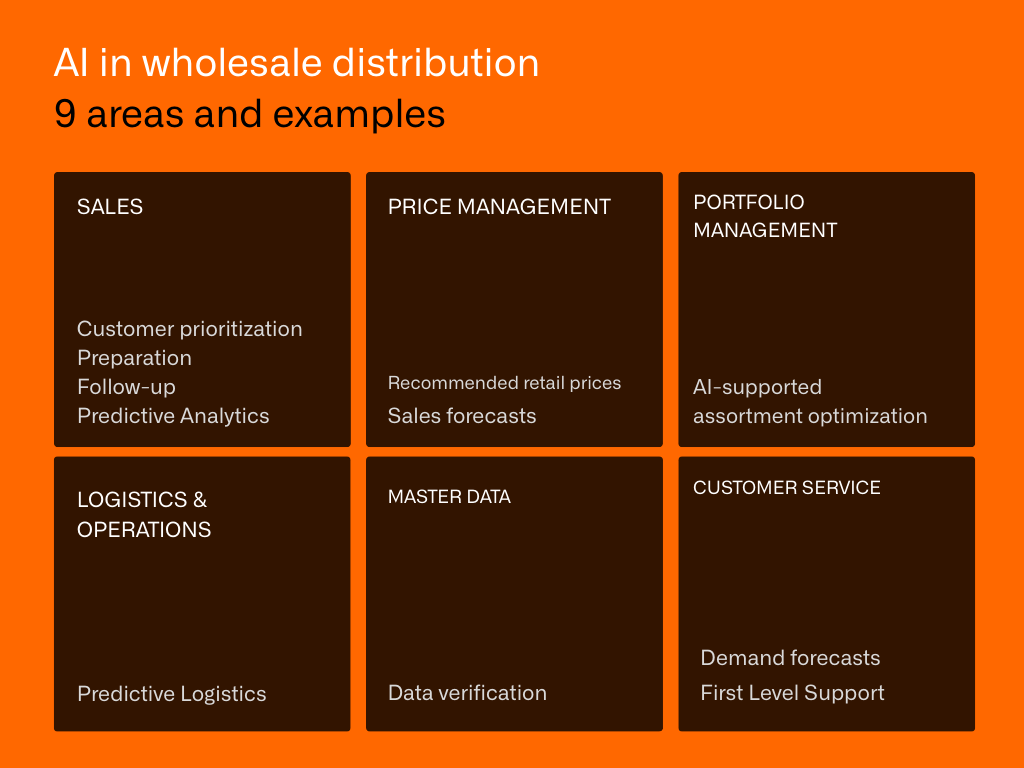
The examples above give a good overview of where the journey is heading.
In the next sections, we will focus on a few concrete areas in which AI is already achieving measurable effects today.
Successful AI strategies are characterized by addressing areas where decisions have an immediate impact on business success. We have prioritized the most important levers by their impact:
I. Sales: The lever for profitable growth
1. AI takes over data work for targeted prioritization and preparation
Many field sales teams still work according to rigid visit cycles or gut feeling. This is inefficient. An AI continuously analyzes transaction data in the background: Is the order frequency of an A customer declining? Were there quote requests that did not result in an order?
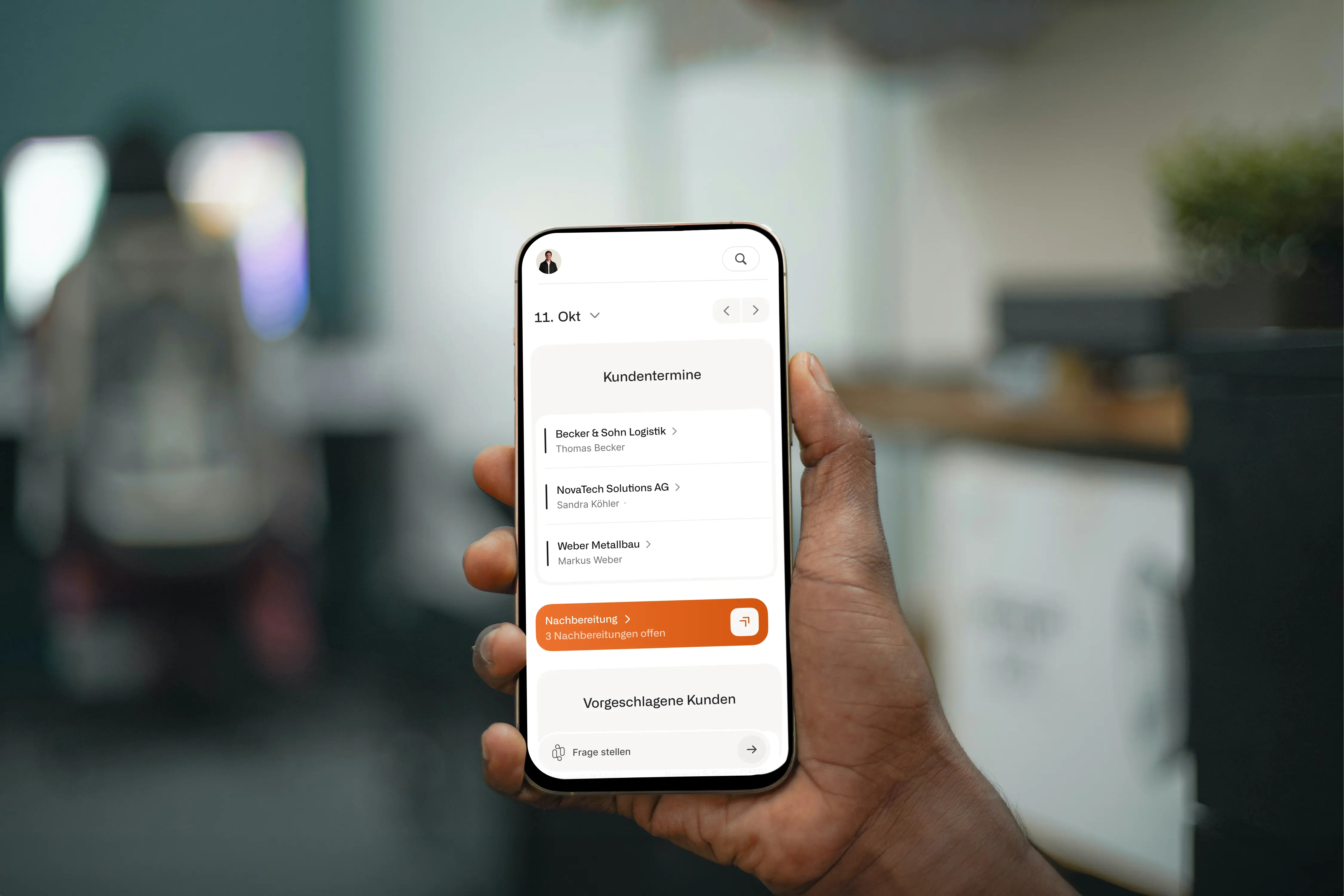
The value: The AI creates a dynamic priority list. Your sales team knows exactly every morning which three customers offer the greatest closing or recovery potential.
Another example here is the identification of next best opportunities, for example through upsell recommendations.
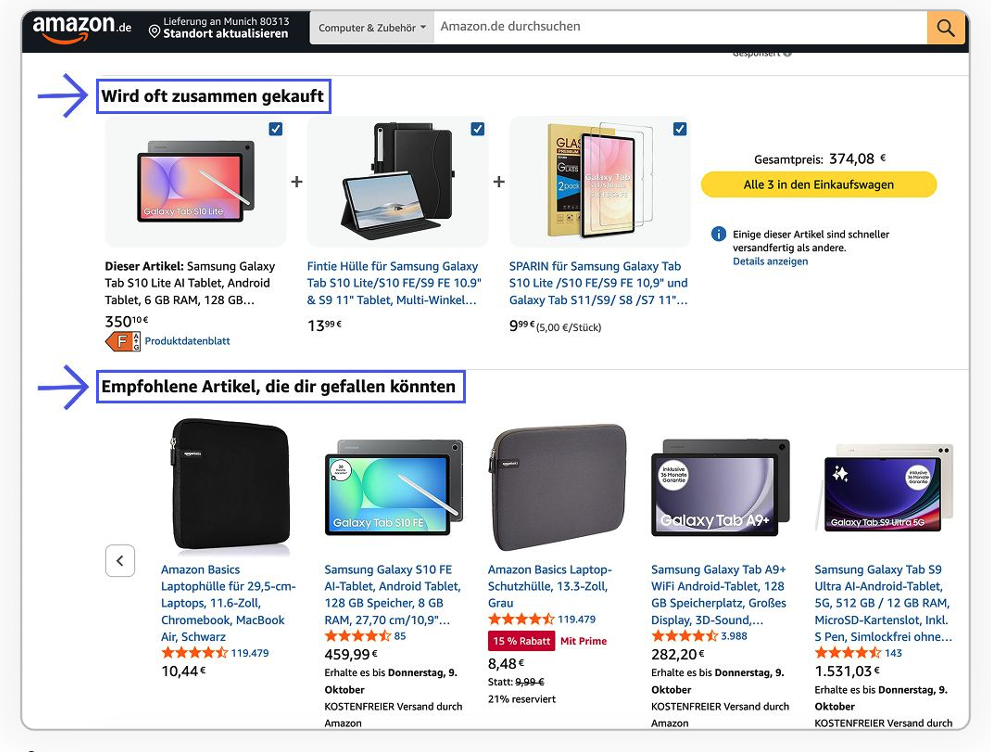
People know this from online shops like Amazon: Algorithms identify products that similar customers buy as well as complementary products. These recommendations already account for 35% of the online giant’s shop revenue.
The underlying problem exists in exactly the same way in wholesale:
A customer has been buying products A and B for years but sources C from a competitor because the sales rep never actively offered it. With 50,000 SKUs, humans lose oversight.
The value: Through market basket analysis, AI recognizes which products statistically belong together. It delivers concrete recommendations per customer to your team: “Customers like this also buy this accessory with an 80% probability.” The result is a significant increase in customer lifetime value.
2. Making travel time usable with voice AI
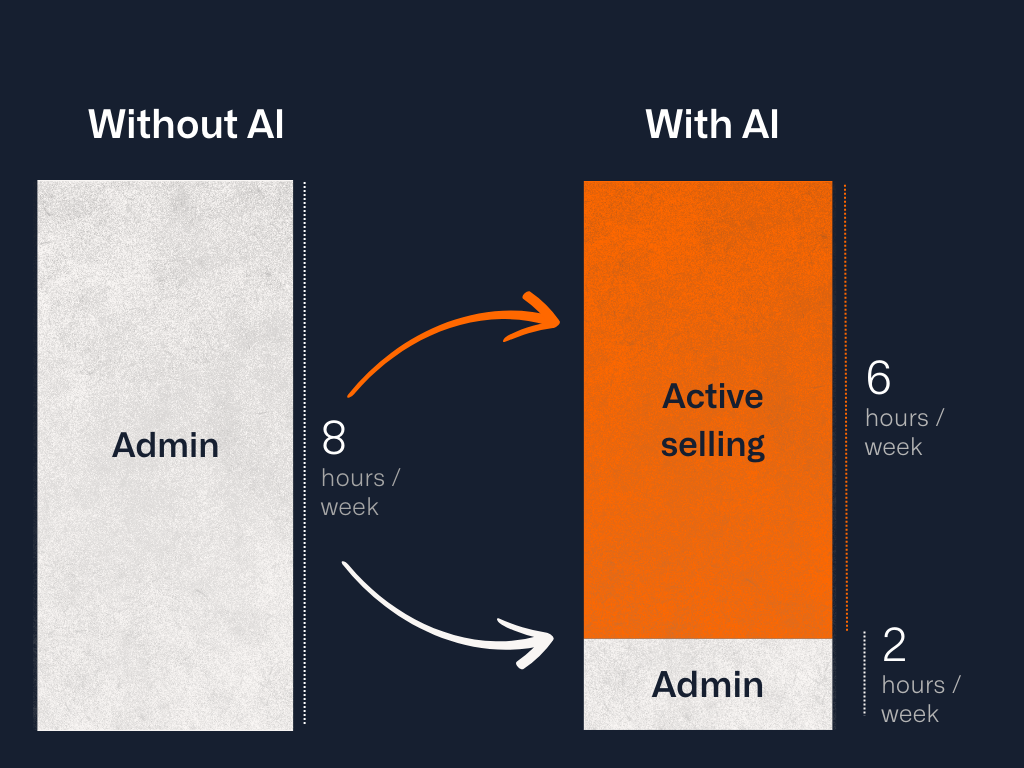
Sales spends two thirds of its time on activities away from customers, from admin to data work.
It is even worse in field sales, where reps spend 21 hours per week alone in the car. AI makes previously unproductive time, the drive, productively usable.
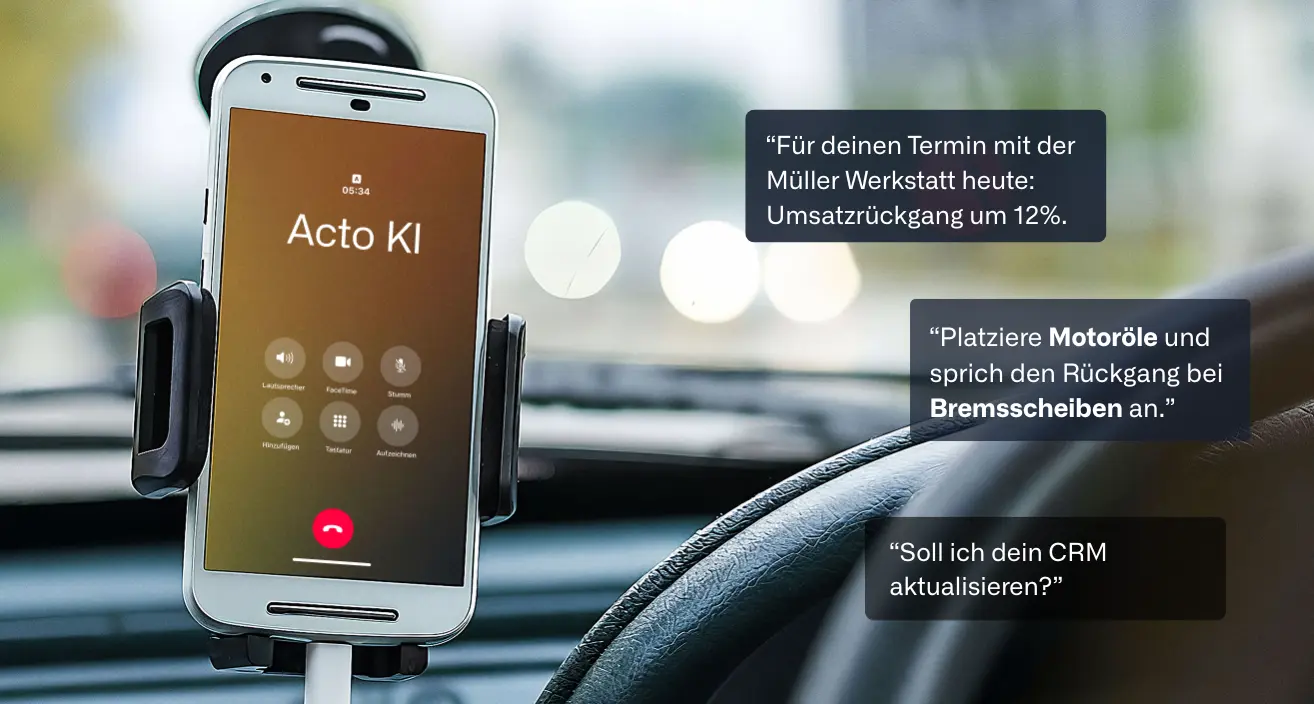
The best known example in the industry is PICO from Würth, an AI assistant that primarily takes over administrative tasks such as sending offers.
Generally available solutions like Acto bring the technology to the mid market and complement it with intelligent data insights.
3. Automated workflow support and CRM enrichment
Salespeople hate CRM systems. Valuable information from sales conversations is often missing because documentation is too time consuming.
The value: AI tools can transcribe conversations, with consent, or convert voice notes directly into structured CRM data. Before the next meeting, the AI delivers a 30 second briefing: “Last time the customer complained about delivery delays for product X. Start the conversation with an update on this.”
II. Inventory and pricing management
4. Dynamic pricing: Moving away from the “watering can margin”
Stable price lists are a risk in times of volatile markets. Manual price adjustments for thousands of items are impossible.
The value: An AI analyzes market developments, competitor prices, and the individual willingness to pay of your customer segments. It suggests prices that optimize margin without jeopardizing competitiveness. Especially for explanation intensive C items, there is often unused potential here.

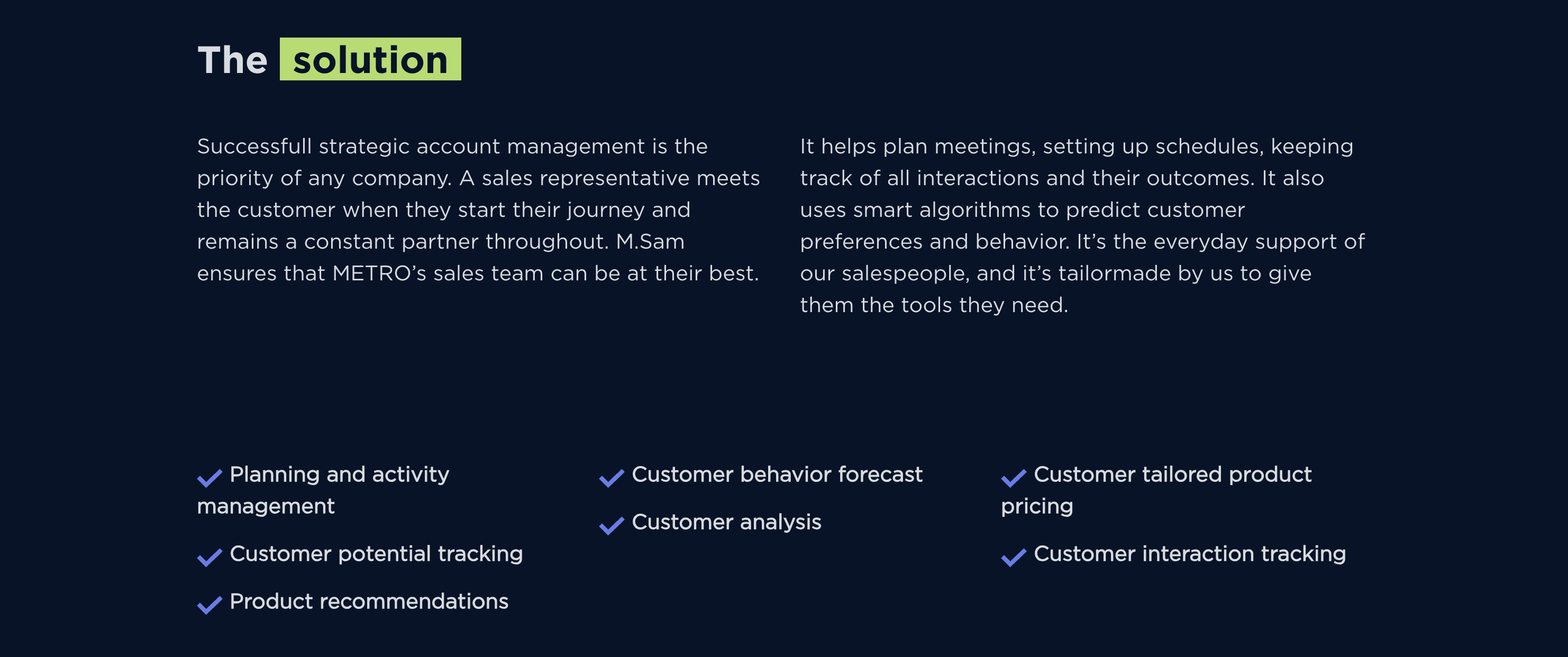
An example from wholesale is provided by Metro with its tool "M.SAM" which recommends field sales reps who to visit - along with individual price suggestions per client.
5. Intelligent demand forecasts for promotion planning
Promotions in wholesale often end either in out of stock situations or massive overstocking. For more forecasting scenarios, see our overview of predictive analytics in wholesale.
The value: AI models incorporate external factors such as weather, holidays, or regional trends. You receive a forecast that goes far beyond the average of previous years. This ties up less capital and increases delivery performance exactly when demand peaks.
III. Logistics and operations
6. Predictive logistics: Intelligent shipment bundling
Customers often place small orders spread across the week. This drives logistics costs per order upward.
The value: The AI predicts ordering behavior. It recognizes: “Customer Müller will probably place a supplementary order tomorrow.” The system can suggest delaying today’s shipment by a few hours to send both orders in one package. This saves packaging material, shipping costs, and CO2.
7. AI supported assortment optimization
Assortments tend to “fatten up”. Dead items block valuable warehouse space.
The value: An AI not only identifies slow movers, but also recognizes cannibalization effects, meaning when two almost identical products take sales from each other without increasing total revenue. This allows you to optimize working capital automatically.
IV. Master data and customer retention
8. Automated master data maintenance
Poor data quality is the “AI killer”. Duplicates or incorrect units cause errors throughout the entire chain.
The value: AI bots scan your databases around the clock. They correct formatting errors, complete missing product attributes through web crawling, and prevent duplicates already when a new item is created.
Example from the mid market: Ludwig Meister uses AI to automatically maintain huge volumes of product data, from screws to complex drive technology. Where hundreds of hours used to flow into manual correction of supplier data, the AI now detects inconsistencies and independently enriches missing attributes.
9. Churn prediction: Saving customers before they leave
A customer rarely cancels actively in wholesale. They simply order less and less. When humans notice it, it is usually too late. Our guide on how to prevent customer churn shows which early signals to watch.
The value: AI recognizes subtle behavioral changes, for example longer intervals between webshop logins or smaller baskets. It raises an immediate alert so your team can intervene with a targeted offer while the business relationship still exists.
Example: Churn warning from Acto
Conclusion: Focus beats technology
Despite the technological possibilities, more than two thirds of wholesalers work without a sound strategic roadmap. Investments often dissipate into isolated projects without scalability.
Management takeaway: The decisive competitive advantage does not arise from the mere use of technology, but from improving decision quality. AI must be implemented where it helps your team act faster and more profitably in daily operations.
The best entry point for wholesale remains sales. Here, the impact on company results is measurable fastest and acceptance within the organization is highest.
Curious how your sales team can sell proactively with Acto’s AI companion while saving time?
Schedule a free demo with our team.