

AI sales software for technical and industrial distribution
Notice when a customer starts buying grinding discs elsewhere
Notice when a customer starts buying grinding discs elsewhere
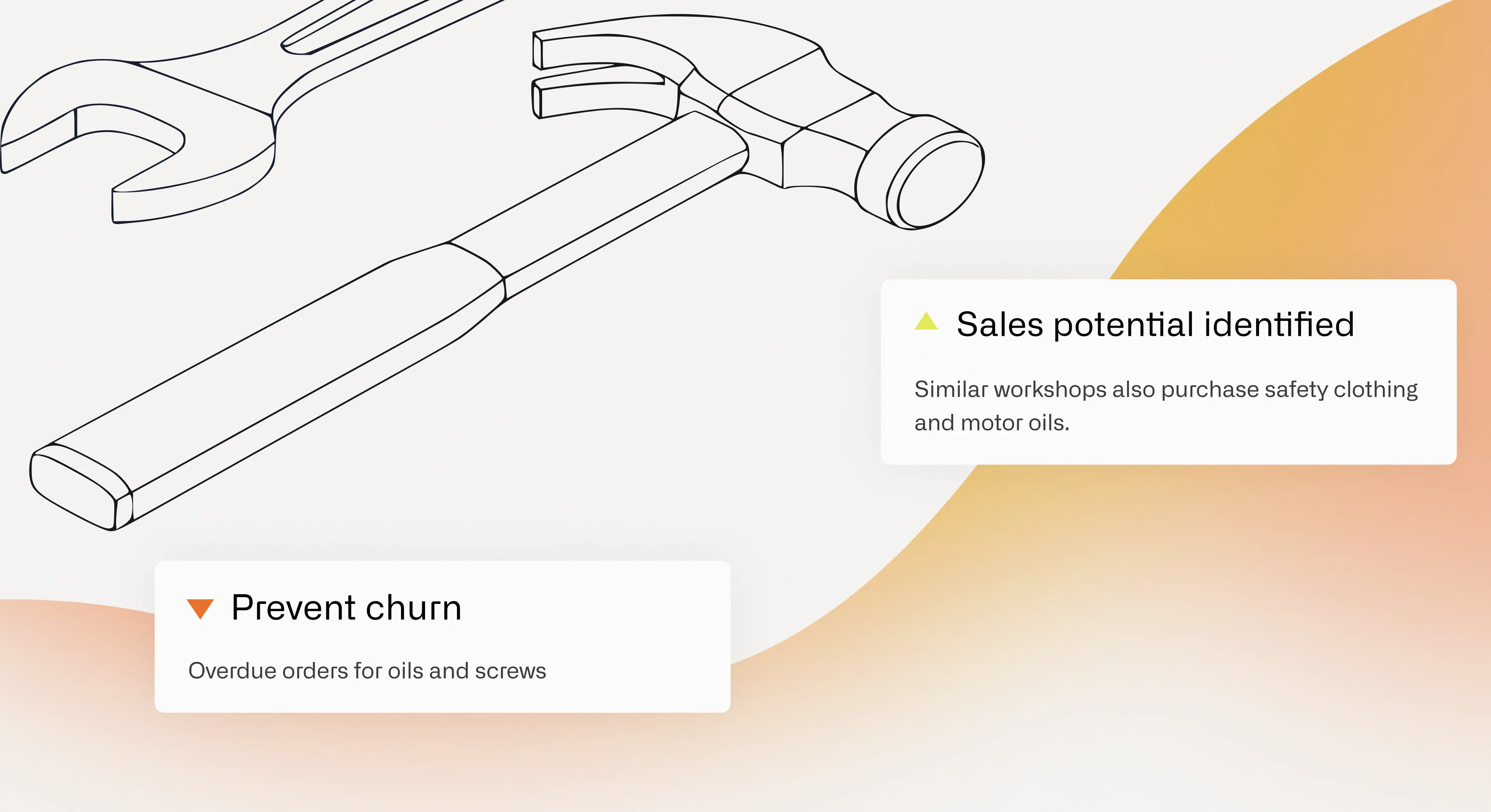
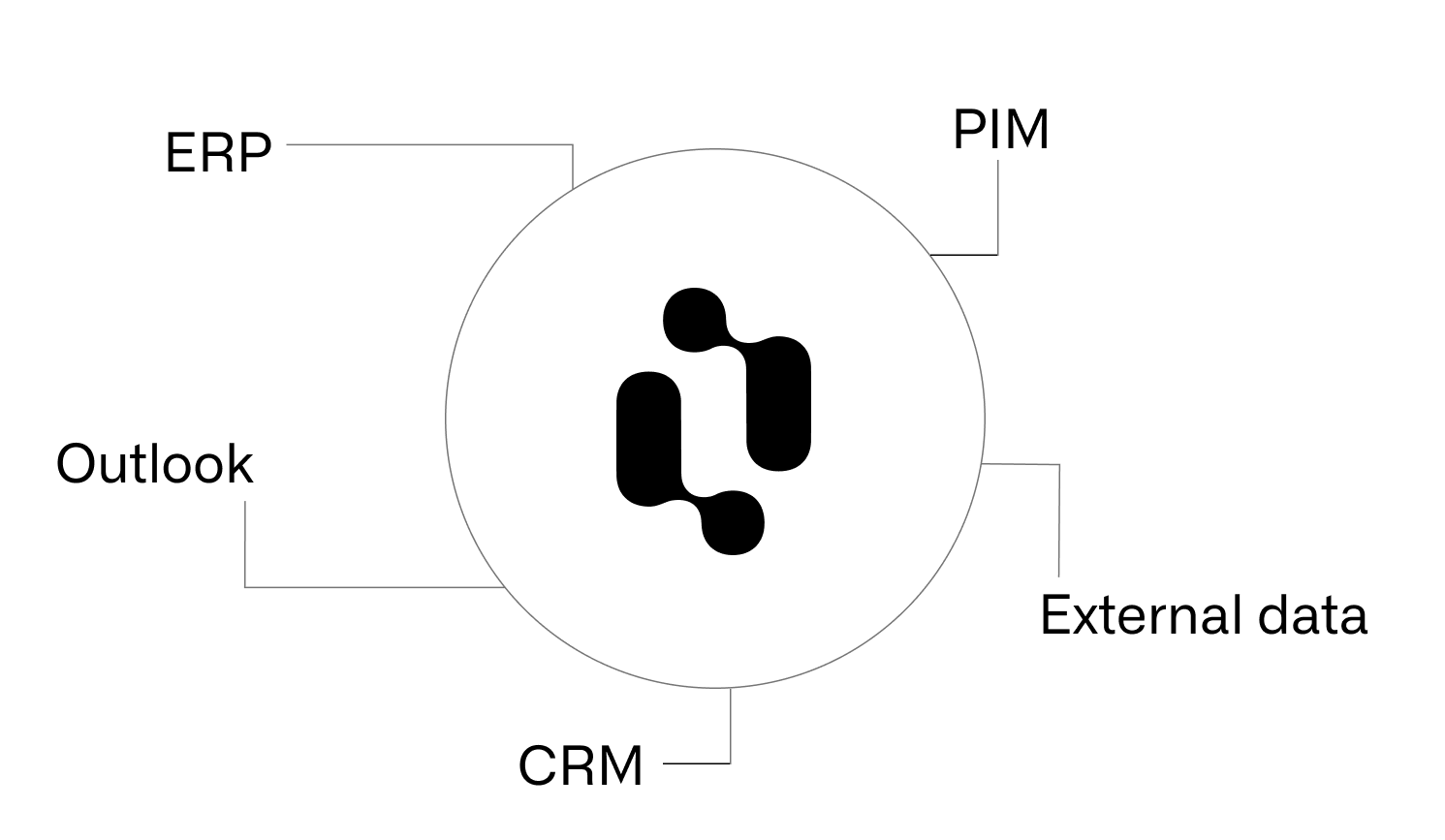
Your customers order via webshop, OCI, kanban and field sales. Acto reads every channel and flags when consumables stop coming in or whole product groups go missing.
Technical distributors and manufacturers work with Acto




Signals your field team sees every morning
Example: Metallbau Körner has not ordered abrasives for nine weeks, normally every four. Screws and PPE continue as usual. Acto suggests asking about abrasives and terms at the next visit.
Example: A machining shop buys drills and taps but no cutting fluid. Most comparable shops buy both. Acto suggests bringing samples.
Example: Hydraulik Seidel called off 20% less last quarter than in the same quarter last year. Acto flags it so you can talk to the customer before the volume moves to a competitor.
Acto learns the language of technical trade
Large ranges, many channels, consumables next to capital goods. Acto knows the difference and assesses every customer accordingly.
- C-partsLow-value consumables such as screws, nuts and cable ties: many lines, small unit value.Acto looks at them as a package. When C-parts business drops, it is often the first sign of a supplier switch.
- Consumables versus capital goodsThe grinding disc comes every month, the saw every ten years.Reorder signals only for consumables. After a machine, Acto suggests accessories and wear parts, not a second machine.
- PPEPersonal protective equipment, demand depends on headcount.If the business grows but PPE volume does not, Acto flags it.
- Standard parts (DIN, ISO)Interchangeable, price decides.Falling volumes show early, before the customer moves entirely to a cheaper supplier.
- Kanban and vending systemsReplenishment runs automatically, without a conversation.Falling call-offs are reported as a production change at the customer, not as a normal ordering pause.
- Your own product group namesEvery distributor names its product groups differently.Acto uses the names from your ERP, so signals read in your team's language.
Examples of how Acto supports you every day
Prioritize
Prioritize the customers with the greatest potential every week.


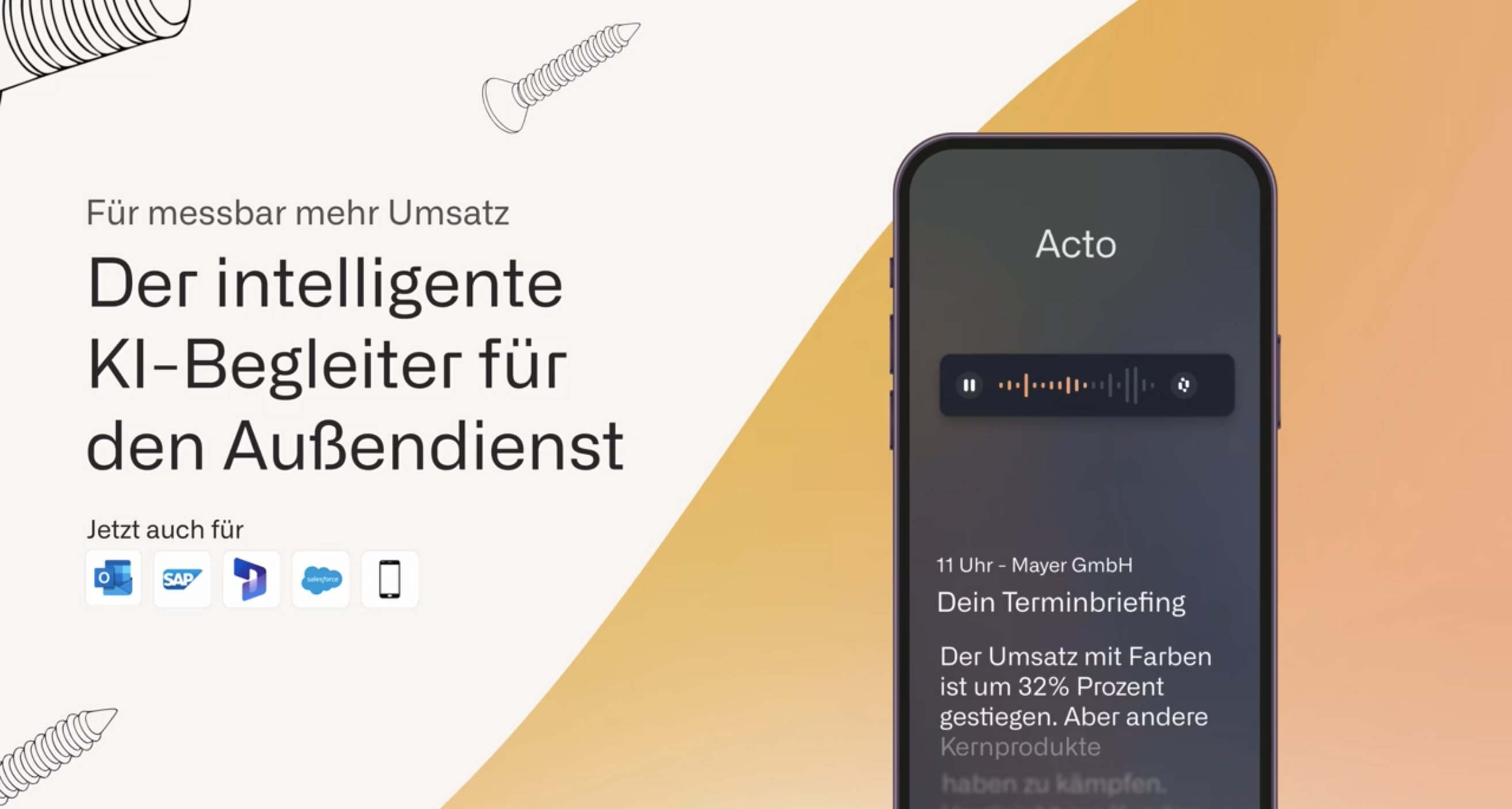
You plan your week in Outlook, Acto recommends customers and provides context
Prepare
Prepare appointments with precision — even while you're on the go.


Find the most important customer information, risks and potential at a glance on your smartphone
Recap
Bring notes to your CRM,
and automate follow-ups.
Open a customer email and see their full order history and potential next to it
Add notes directly to your smartphone







Get a personal consultation
Arrange a personal appointment to ask questions and see Acto in action.



Do you have any questions?
We're here for you!
Does Acto distinguish between consumables and capital goods?
Yes. Reorder signals only apply to consumables such as abrasives, PPE or standard parts. After a machine purchase, Acto suggests matching accessories and wear parts, not a second machine.
What about customers who order via OCI, webshop or kanban?
These orders feed into the analysis just like field sales orders. If call-offs from a replenishment system fall, Acto reports it as a possible production change at the customer.
Does the analysis work with more than 100,000 items?
Yes. Böllhoff works with more than 100,000 items and Infor M3. Acto analyses at product-group level and compares each customer with similar businesses. In the pilot, Acto users achieved 8.6% more revenue than non-users.