Account Management in B2B: Getting More From Existing Customers With Data and AI
Summary
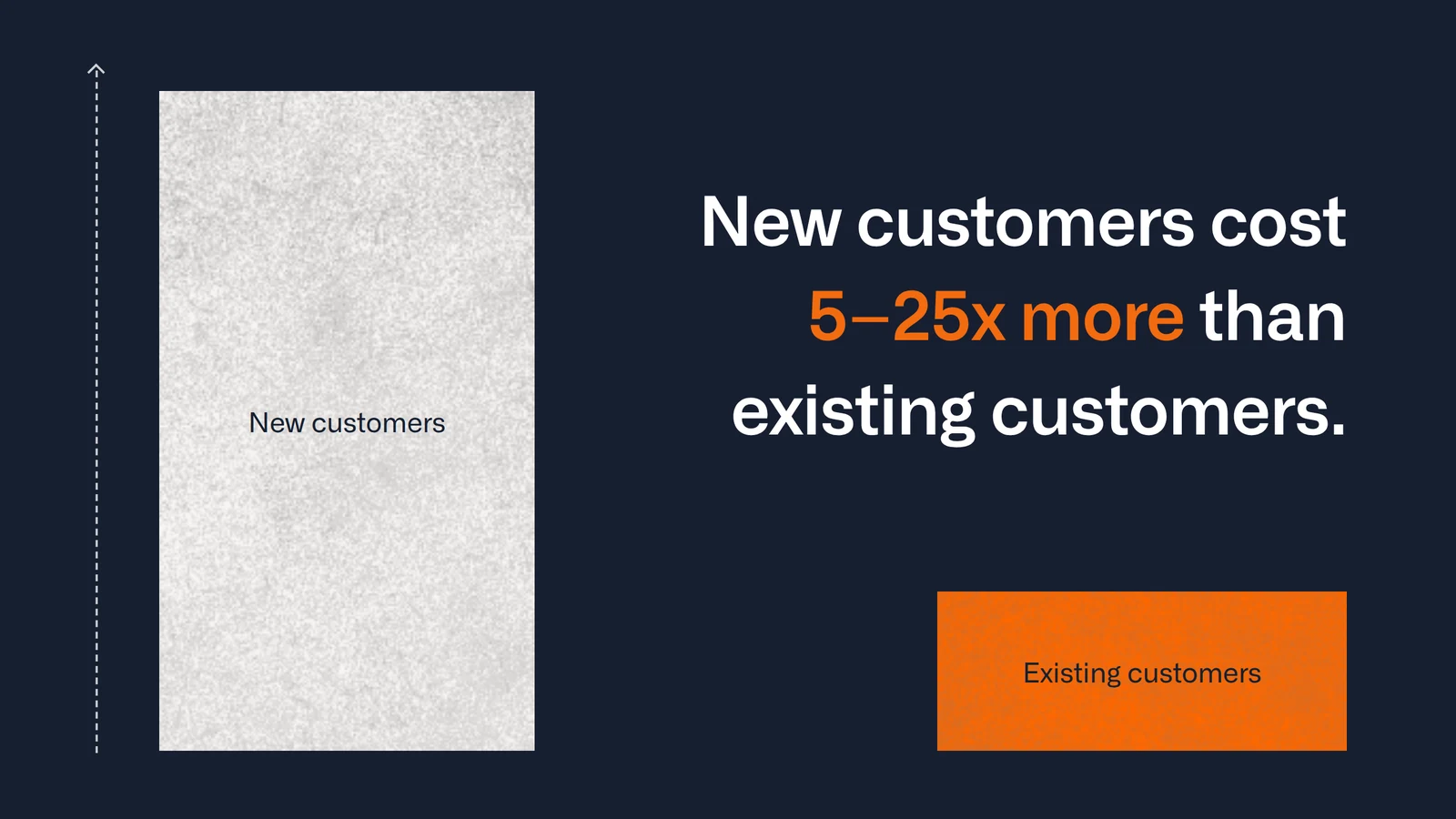
- Acquiring a new customer costs 5 to 25 times more than retaining an existing one, and a 5% increase in retention can raise profits by 25 to 95% (Harvard Business Review, citing Bain & Company research)
- Manual account management breaks down at 200+ customers per rep; five data-driven levers help: churn risk, repurchase cycles, upsell and cross-sell, open quotes and reactivation
- Results in practice: Schäfer Shop grew revenue by 11.2% with Acto, compared with a control group
In most B2B companies, there is more growth potential in the existing customer base than in new business. It just isn't tapped systematically.
Even so, most wholesalers and distributors put the bulk of their sales energy into winning new customers.
The reason is often an information problem rather than a strategic mistake.
Which customers to visit when, with which focus and based on which data: without digital support, that simply does not scale.
Even Würth, one of the world's largest distributors of fastening and assembly materials, says so directly in its 2023 annual report:
"Our share of the market is estimated at just five percent due to a low share of the market in most countries, with a few exceptions. What would appear to be a disadvantage actually signals major growth potential that we can tap into by further expanding our customer base and intensifying our customer relationships, for example, by continually enhancing intelligent distribution systems that offer real benefits to our customers."
This article shows what data-driven account management looks like in practice: the five levers, how AI systems take over prioritisation, and what wholesalers can learn from companies such as Schäfer Shop, Sysco and Metro.
1. Why account management needs a rethink
Traditional management of existing customers relies on experience, intuition and personal relationships. An experienced field rep knows which customers to visit regularly and acts accordingly. That works as long as the customer portfolio stays manageable.
As the portfolio grows, this model breaks down.
With 200, 300 or 500 customers per rep, manual prioritisation is no longer possible. Customers at high risk of churning are not spotted in time. Upsell potential goes unused. Quotes expire without anyone following up.
The result: reps spend their time with customers who would buy anyway, and miss the customers where a conversation would actually change something.
The economics make this expensive. According to Harvard Business Review, acquiring a new customer is five to 25 times more expensive than retaining an existing one, depending on the study and the industry. The same article cites research by Frederick Reichheld of Bain & Company showing that increasing customer retention rates by 5 percent increases profits by 25 to 95 percent. More on the trade-off: New vs. existing clients in B2B sales.
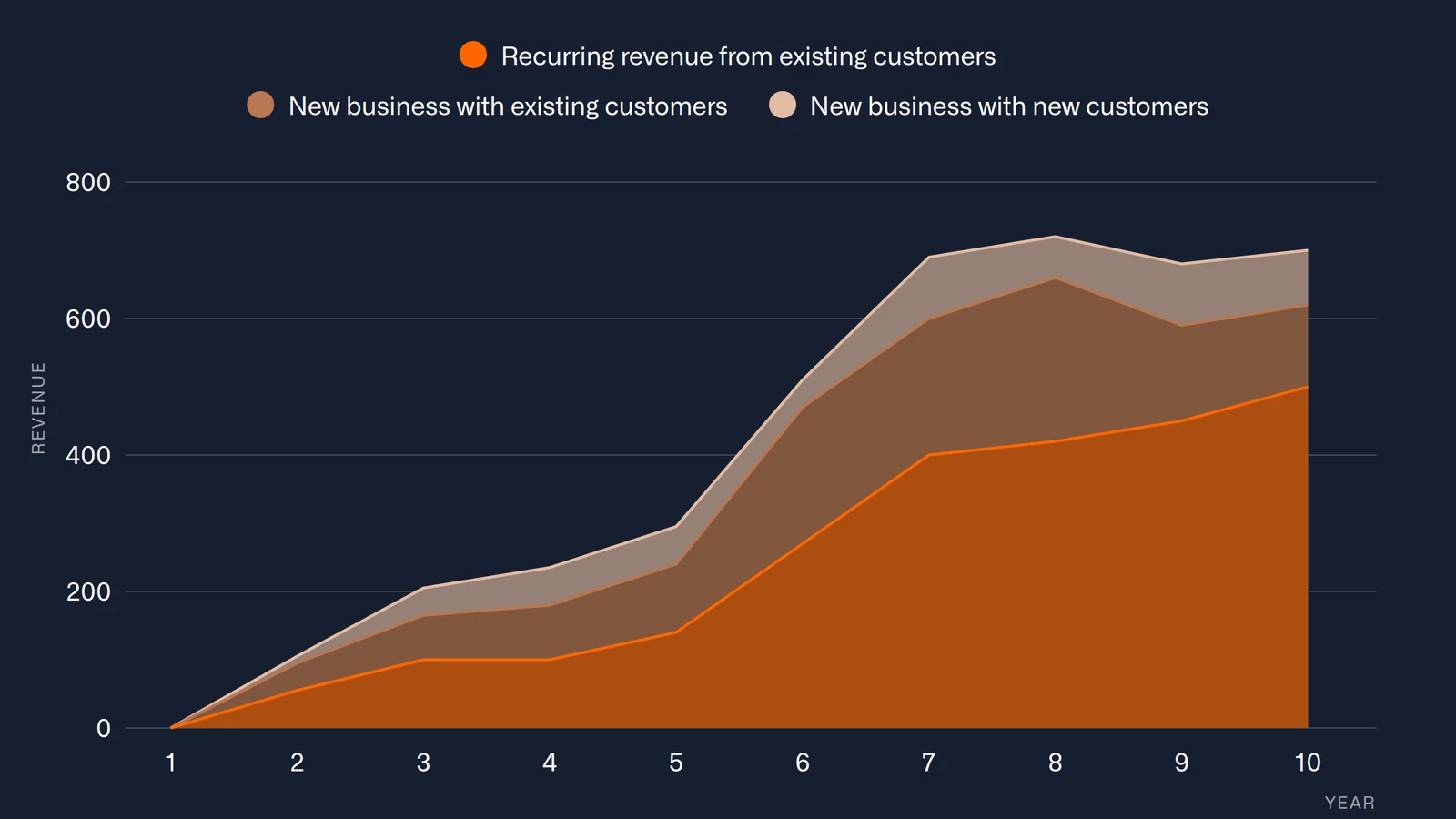
Over time, the existing customer base also becomes the largest share of revenue. Recurring business with existing customers grows year after year, and new business with those same customers adds to it, while revenue from brand-new customers makes up a comparatively small layer on top.
2. What "intelligent" account management means
Intelligent account management has little to do with filling in more CRM fields or building more dashboards.
It means the system handles the signal processing, and the rep receives a clear recommendation for action.
The technical core is a scoring model that continuously evaluates dimensions such as:
- churn risk
- untapped revenue potential
- effort required for a visit
Customers with high risk and high potential automatically move to the top of the visit list. The same principle is behind potential-based selling.
The decisive difference from a classic CRM system:
Rather than waiting for a rep to run a query, the system delivers a prioritised list proactively and on a regular basis, including the reason why a particular customer has priority today.
3. The five levers of intelligent account management
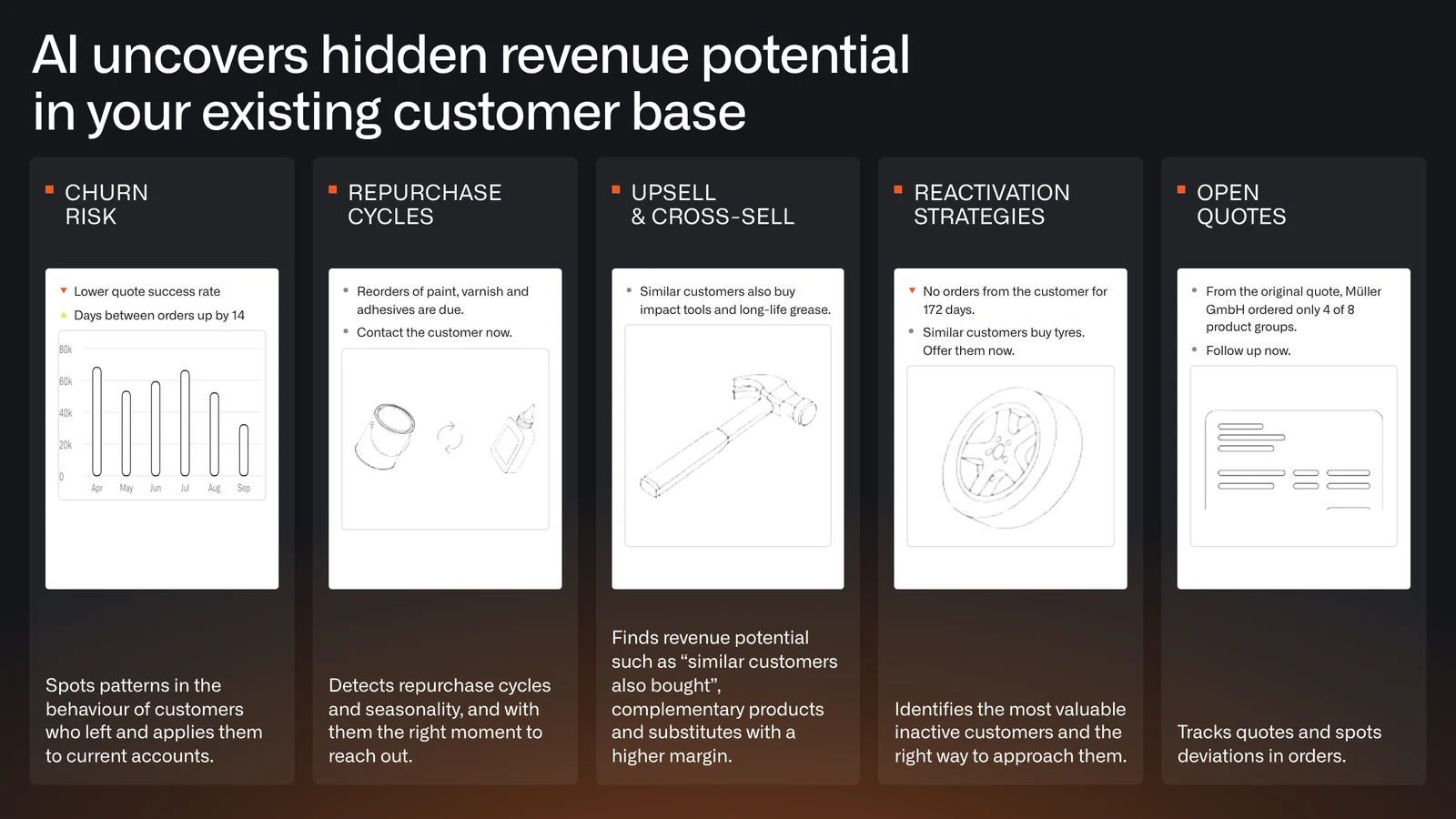
AI-supported account management solves the scaling problem by automatically evaluating all relevant signals from ERP, CRM and transaction data. Instead of handing the rep yet another dashboard, it delivers a recommendation: whom to visit, why, and what to focus the conversation on.
3.1 Spot churn risk early
Notice early when a competitor is taking over.
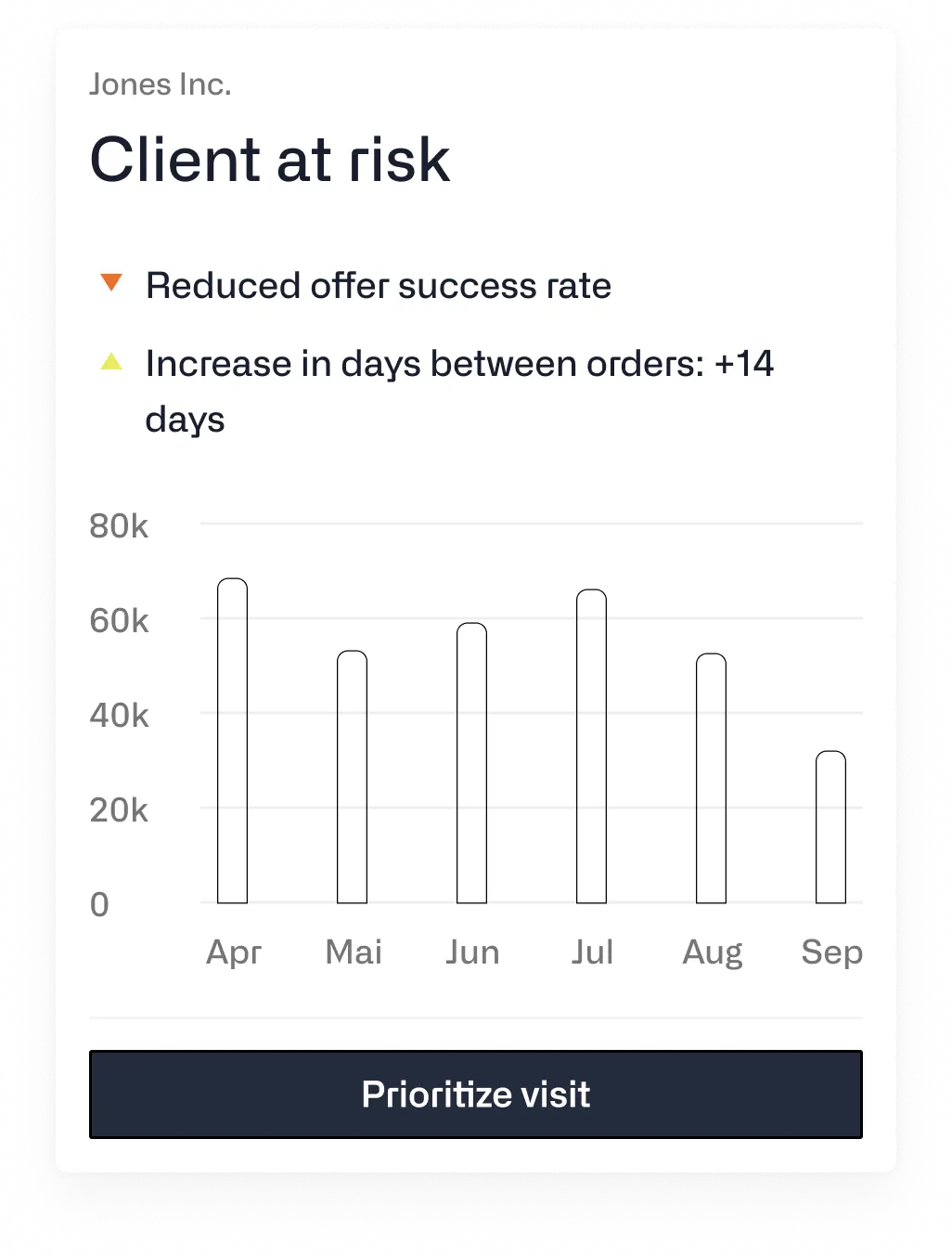
The model continuously analyses each customer's ordering behaviour and compares it with that customer's own historical baseline. A customer who has ordered cleaning products every three weeks and has not done so for six weeks shows a classic silent churn signal: no complaint, just orders that stop coming.
One common technical approach is RFM-based churn scoring (recency, frequency, monetary value) at category level. The model calculates separately for each product category whether order frequency has dropped significantly below the historical average. A configurable threshold triggers an early warning, for example when frequency falls 1.5 to 2 standard deviations below the baseline. That way the signal arrives weeks before a customer would be classified as "lost" in the ERP.
For the rep, the result is a specific, actionable signal instead of a bare "this customer has not ordered for 45 days", for example:
"Customer X shows a churn signal in the cleaning category. Last purchase 42 days ago, historical rhythm 21 days. Recommendation: bring it up at the next visit."
Further reading: How to prevent customer churn in B2B.
3.2 Recognise and use repurchase cycles
"Hi, your engine oil is probably running low. Here's our offer."
Many products in B2B wholesale have natural repurchase cycles:
consumables, seasonal items, operating supplies that are needed regularly. If you know these cycles, you can reach out proactively, before the customer even thinks about reordering.
The model learns from each customer's order history which products or categories follow an individual repurchase cycle. It also identifies seasonality. A customer who orders garden supplies every March triggers a recommendation for the rep at the end of February. The rhythm alone predicts the need, even without any churn signal.
Repurchase cycles also say something about customer satisfaction. A customer whose six-week cycle suddenly stretches to ten weeks may be buying the rest from a competitor. The model flags this shift as a latent churn signal. More on this lever: How to drive repeat purchases.
3.3 Systematically capture upsell and cross-sell potential
"Oh, you sell that too?"
The classic problem:
A customer has been buying tools from the same rep for years and would also buy workwear and safety equipment, but does not know the range includes it. Or the customer buys tools, but 30 percent less than comparable customers of the same industry and size.
The technical mechanism behind upsell and cross-sell combines collaborative filtering with peer group benchmarking. The model groups customers by industry, size and buying behaviour and identifies gaps in the range a customer buys. A typical question it answers: what do most customers in the peer group buy that this customer does not? This is the logic behind a white space analysis.
On top of that comes market basket analysis at transaction level. Which products are frequently bought together? If product A is in the basket, product B is relevant with a certain probability, say 73 percent. These product pairs are delivered to the rep as targeted talking points.
According to McKinsey (2023), companies with successful experience-led growth strategies, meaning those that increase customer satisfaction by at least 20 percent, can increase cross-sell rates by 15 to 25 percent and boost share of wallet by 5 to 10 percent. How to measure and grow that share: Share of wallet in B2B. Practical tactics: Upselling in wholesale and Cross-selling in B2B.
3.4 Follow up on open quotes, and spot anomalies
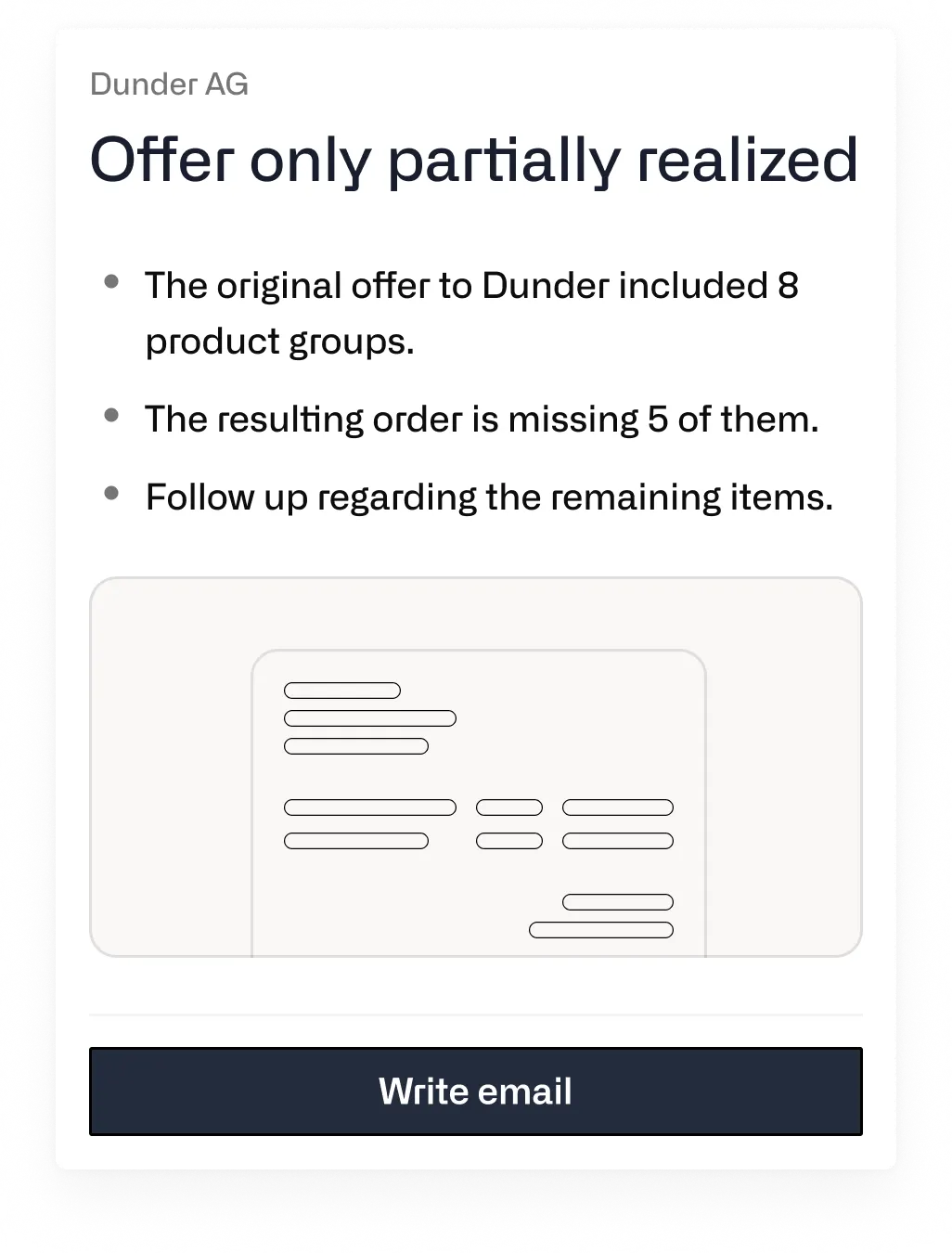
"From our quote last month, you never ordered two of the items."
It happens all the time in field sales: a quote is created but never followed up. The customer decides differently, buys elsewhere or simply forgets. In most companies, quote follow-up is manual work: CRM reminders, ad hoc calls, and different priorities depending on the rep.
Data-driven quote tracking solves this in two ways. First, the system reminds the rep at the right moment. Instead of a fixed calendar reminder after 30 days, the timing follows the decision period that has historically applied to this customer and this product category.
Second, the model spots anomalies in the order structure that point to split sourcing, an important warning sign of competitor activity. If a customer suddenly places smaller quantities per order, they may be shifting part of their volume to another supplier. The system detects this shift in the order pattern and gives the rep a concrete reason to start a conversation.
3.5 Reactivate inactive customers
"You haven't ordered for a while. Take a look, this might be interesting for you."
Not every inactive customer is lost. Some pause for seasonal reasons, some because of internal budget processes, some after a single bad experience. The challenge: in a portfolio of 300 to 500 customers, it is impossible to see which inactive customers have reactivation potential and where the effort will not pay off.
The scoring model prioritises here as well. For each inactive customer it estimates the historical customer value (a CLV proxy based on past transactions), the likelihood of reactivation (derived from the pattern of inactivity: an abrupt stop versus a gradual decline) and the effort involved (last contact, distance, open complaints).
The result is a prioritised list of the most valuable inactive customers with the highest reactivation potential. Instead of all 47 inactive customers at once, the rep sees the five where a call or visit makes sense this week.
.webp)
4. From data signal to visit preparation: the Acto approach
Data alone changes nothing. What makes the difference is turning data signals into concrete, actionable recommendations, right inside the rep's working day.
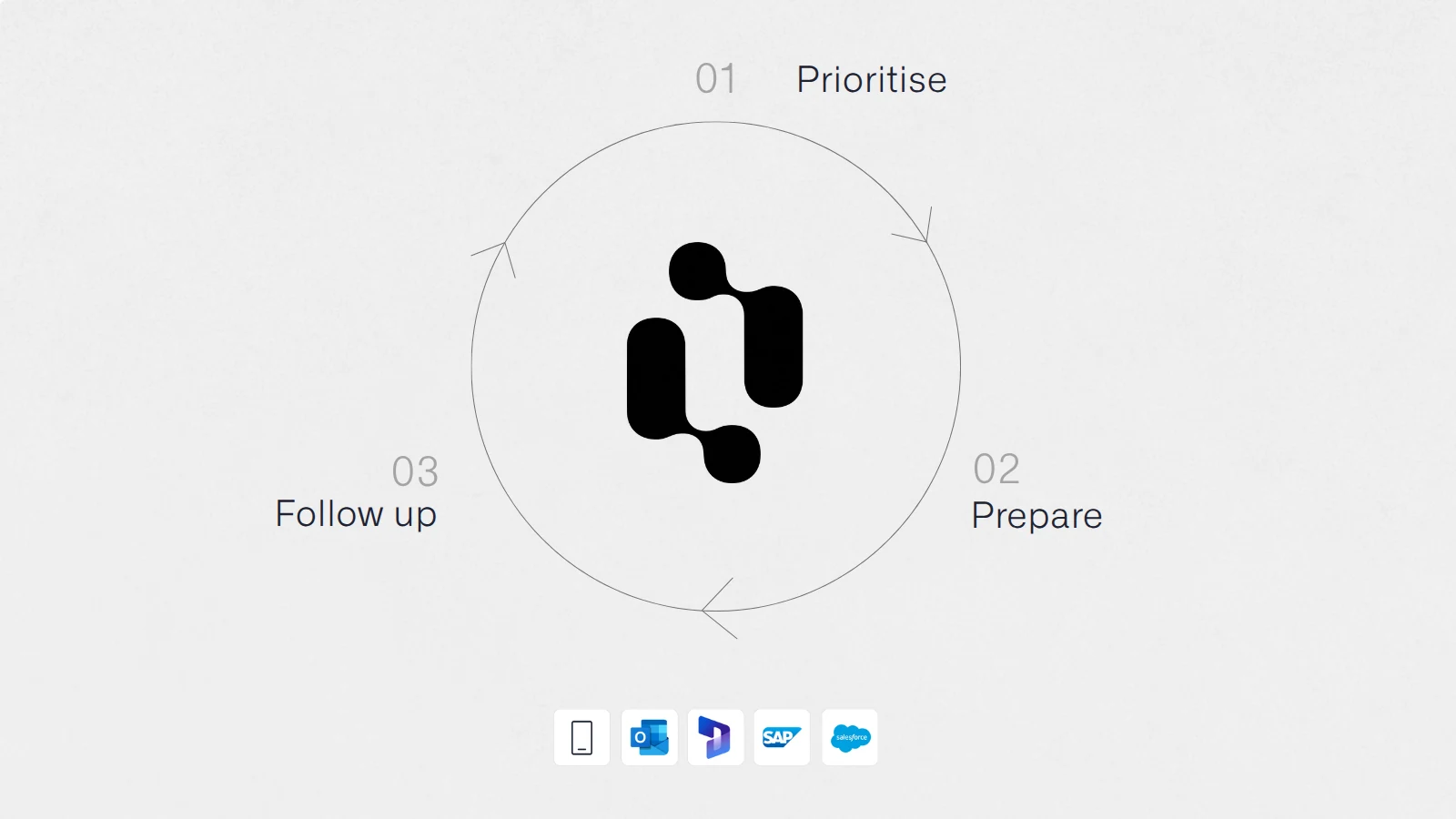
The Acto cycle connects three phases:
- Prioritise: Acto analyses ERP and CRM data with customer-specific machine learning models and shows each rep which customers need attention and why. Its 21 signal types range from churn risk and missed repurchases to cross-selling clusters, margin changes, open quotes and expiring contracts.
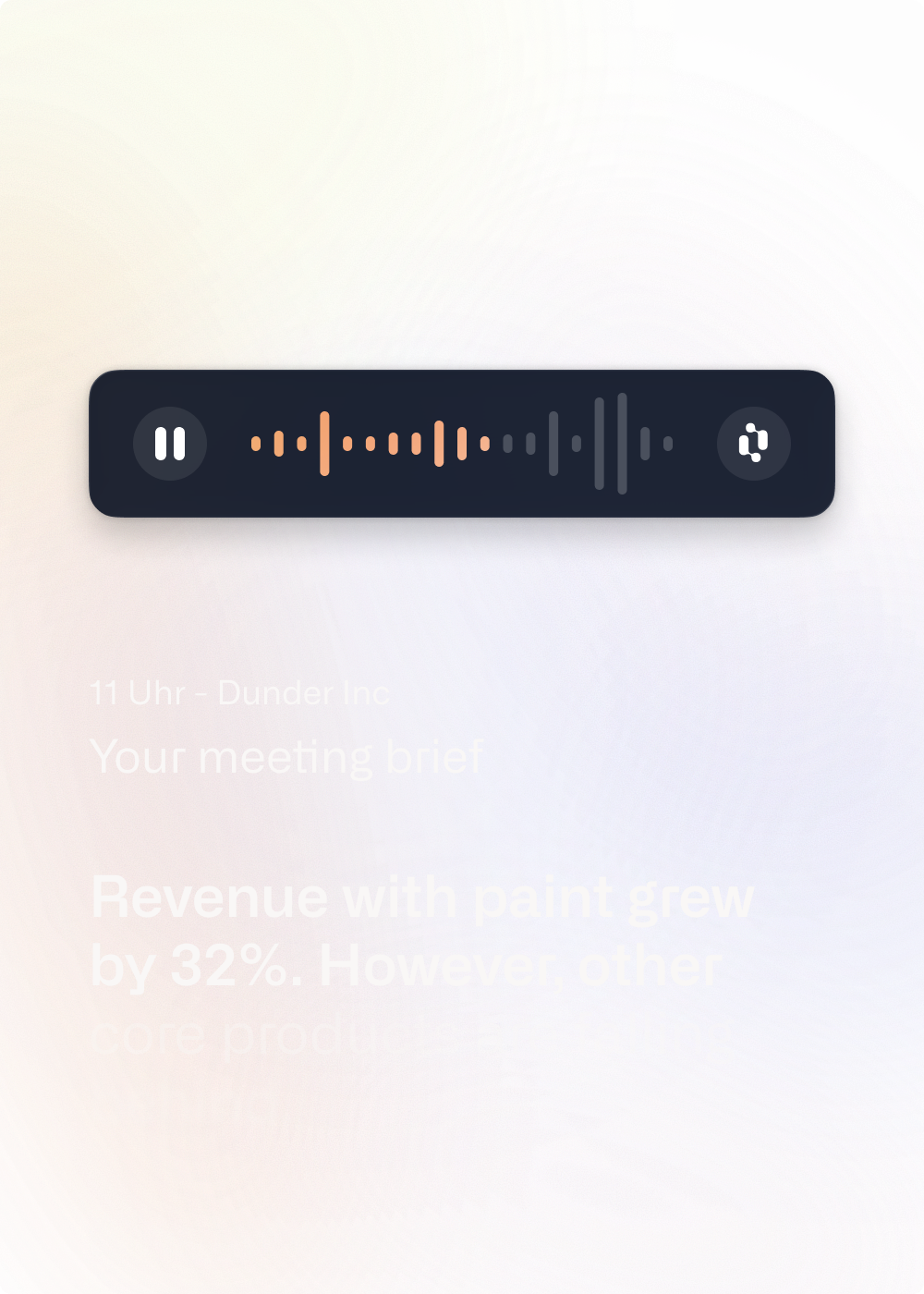
- Prepare: before a visit, the rep gets a briefing with opportunities, risks and account context in the Acto app or directly in Outlook. Preparing for a meeting takes about two minutes.
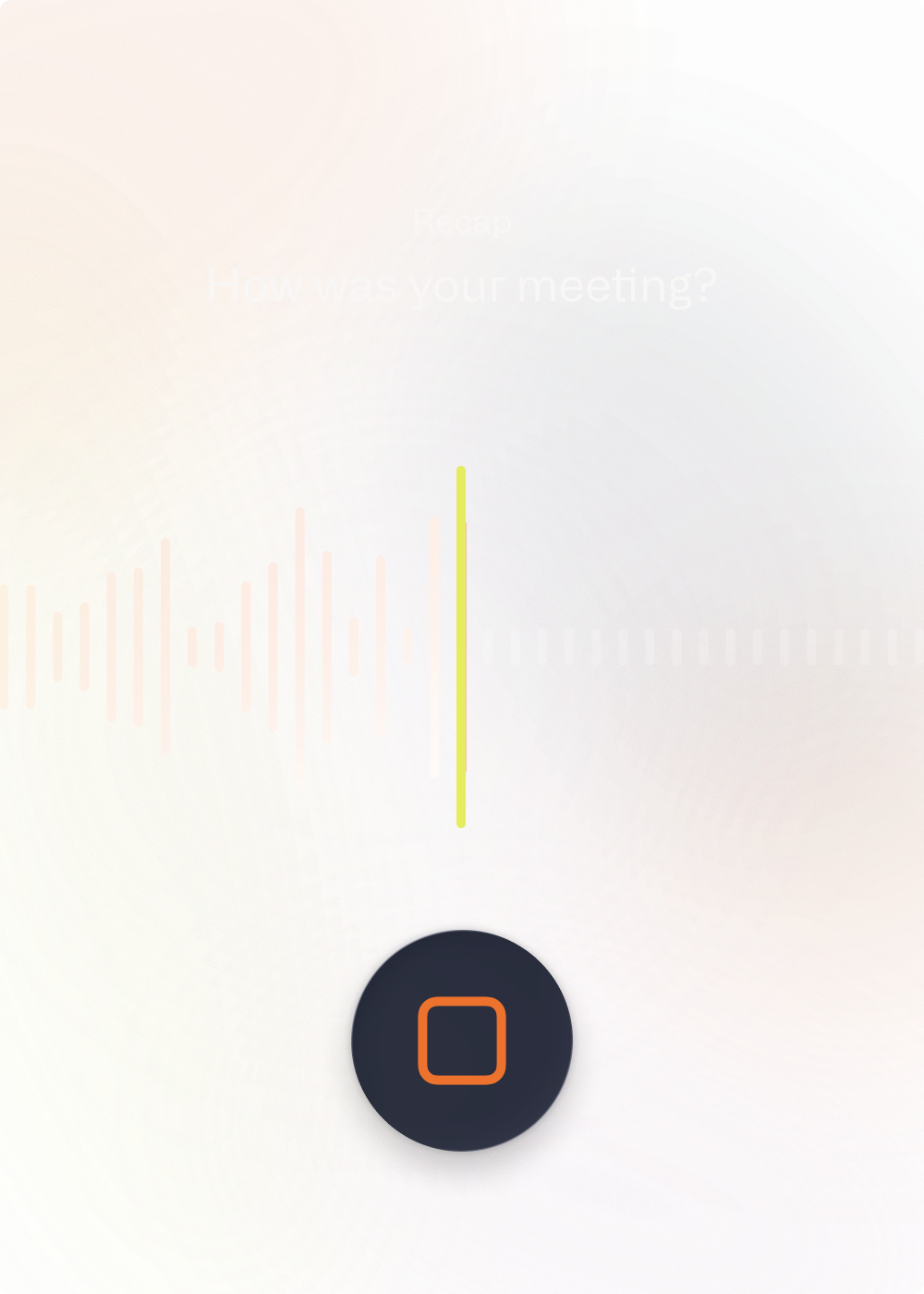
- Follow up: right after the meeting, the rep records the visit report by voice. Acto turns it into a structured report with follow-up tasks and syncs it to the CRM.
This cycle solves a structural problem. In most companies, visit preparation and follow-up take a lot of time and are done inconsistently. In our own customer surveys, reps reported spending up to five hours a week on manual preparation, time they do not spend with customers. Acto cuts this to minutes, because all relevant information is gathered and prepared automatically. At Schäfer Shop, the sales team saves up to eight hours per rep per week.
The individual steps also feed into each other. Today's visit report automatically shapes tomorrow's prioritisation, and Acto learns the company's own terminology along the way. How reports by voice work: Voice to CRM and our sales visit report template.
5. Examples: what data-driven account management delivers
Schäfer Shop and Acto: +11.2% revenue from existing customers
Schäfer Shop, a B2B multichannel retailer of office, warehouse and operating equipment with more than 100,000 products and subsidiaries in 14 European countries, introduced data-driven account management with Acto.
Result: +11.2 percent revenue from the existing customer base in the pilot, compared with a control group. Reps save up to eight hours per week, and 92 percent of signals were marked helpful by the sales team.
The lever: systematically identifying and prioritising customers with upsell potential. The gain came from better visits rather than more visits.
"I start every day with a prioritized list of highly relevant signals, from revenue declines to cross-sell opportunities. It saves me countless hours of research that I can now spend with customers and on targeted selling."
Fabian Wolff, Area Sales Manager, Schäfer Shop
Other Acto customers report similar effects: Plate +10 percent revenue and 35 percent less time between orders, Böllhoff +8.6 percent and Hitado +5.4 percent revenue.
Sysco: data-driven personalisation supports the sales consultants
Sysco, one of the world's largest foodservice distributors, presented its data-driven personalisation programme at its 2024 Investor Day (PDF). The programme combines customer data, purchase history and product recommendations with personalised offers and feeds insights to Sysco's sales consultants. According to the presentation, it had generated around $450 million in incremental sales to date, and Sysco expects more than $1 billion in sales growth at maturity.
The approach: precise segmentation, automatic identification of opportunities and insights for the sales team based on transaction data.
Metro M.Sam: a CRM with behaviour prediction for wholesale field sales
With M.Sam, Metro has developed its own CRM system for its wholesale sales force. According to metro.digital, the system "uses smart algorithms to predict customer preferences and behavior". It helps sales managers plan meetings, organise their day, manage their customers strategically and keep track of all interactions and their outcomes. Metro reports a 25 percent reduction in admin time for its users (vendor figure).
What sets M.Sam apart from a classic CRM: beyond recording activities, it supports decisions. Integrating customer behaviour data enables prioritisation that goes beyond manual judgement.
6. Implementation: what works in practice
Prerequisites for getting started
Data-driven account management needs a data foundation. The minimum: clean transaction data from the ERP system covering at least 12 months, ideally 18 to 24 months so that seasonality is visible, a unique customer ID and a CRM or other channel through which recommendations reach the sales team.
Many companies overestimate the data problem. For working churn scoring, order data at product category level is enough; a full data warehouse infrastructure is not required. With Acto, go-live takes four to six weeks, with less than three days of effort for the customer's IT team, and first results are often visible within weeks of going live. Supported systems: integrations.
Rollout strategy: pilot group instead of big bang
A pilot approach has proven itself. A group of five to ten reps works with the system for three months, while a control group continues to work the usual way. This allows a clean before-and-after comparison against KPIs agreed upfront, such as revenue, contact frequency, number of visits and time saved. It also gives reps time to get to know the system without the pressure of a full rollout. Which KPIs make sense: Field sales KPIs.
Adoption in the field team
The biggest hurdle is usually cultural rather than technical. Reps who have worked on their own judgement for years initially see system recommendations as a restriction. In our experience, the resistance fades once the system delivers a recommendation the rep intuitively agrees with, and identifies a customer they would have overlooked without it.
The key: the system should strengthen the rep, never replace them. The personal customer relationship remains at the core. The system makes sure that relationship is invested in the right customer, at the right time, with the right focus.
Managing existing customers with data, using Acto
Account management is above all a question of prioritisation. Most companies already have enough customer data. What matters is whether that data is translated systematically into recommendations for action.
The five levers (churn prevention, repurchase cycles, upsell and cross-sell, quote follow-up and reactivation) are not new. What is new is the ability to apply all five at the same time, automatically, to a portfolio of several hundred customers. That is the difference between manual and intelligent account management. For a broader view of growing your base, see How to grow existing customers in B2B and Predictive analytics in wholesale.
With Acto's AI field sales software, your sales team sells to existing customers in a targeted, proactive way. Acto is built for wholesalers and distributors as well as manufacturers with direct sales.
Curious?
Book a free consultation with our team.
FAQ: account management in B2B
What is account management in B2B?
Account management, sometimes called existing customer management, covers everything a sales team does to retain and grow its current customers: spotting churn risk, using repurchase cycles, upselling and cross-selling, following up on quotes and reactivating inactive accounts. In wholesale, it typically accounts for the largest share of revenue.
Why does manual account management stop working at scale?
With 200 to 500 customers per rep and tens of thousands of products, nobody can track every customer's ordering pattern by hand. Signals such as a stretched repurchase cycle or a shrinking order size get lost, and reps default to the customers they know best.
Which data do I need for data-driven account management?
ERP transaction data with order history is the most important source, ideally covering 18 to 24 months. A unique customer ID is essential. CRM data such as visit reports adds context but is not required to get started.
How do I get my sales team to accept AI recommendations?
Start with a pilot group, agree KPIs upfront and make sure every recommendation comes with a reason. Acceptance grows once reps see the system point to a customer they would have missed. Tools that deliver recommendations in channels reps already use, such as Outlook or the CRM, lower the barrier further.