Which CRM for Wholesale Distributors? 5 Options Compared
Summary
- For wholesale distributors, most revenue comes from existing customers. Before choosing a system, clarify whether you need a tool for new-customer pipelines or for looking after your existing customers.
- Salesforce, Microsoft Dynamics 365, SAP Sales Cloud and HubSpot are strong CRMs for pipeline, contacts and documentation. In the existing-customer business, they answer the question of which customers need attention this week only with a lot of manual effort.
- Acto is not a CRM. For smaller sales organizations it is a lean alternative to a CRM, for larger ones a sidebar in the existing CRM. It analyzes ERP and CRM data and shows field sales which customers have potential or a churn risk.
- Disclosure: Acto is one of the vendors in this comparison.
Last updated: October 2026
| System | Suited for |
|---|---|
| Salesforce Sales Cloud | larger companies with complex, pipeline-driven processes |
| Microsoft Dynamics 365 Sales | companies that work in Outlook and Teams |
| SAP Sales Cloud | SAP-centric companies focused on orders and terms |
| HubSpot | getting started and winning new customers on a small budget |
| Acto | wholesalers who want to proactively look after existing customers, with or without a CRM |
Monday, 7:40 a.m., a parking lot in front of a painting contractor. The field sales rep has five more appointments today, and the CRM holds a visit report on this customer from spring. The fact that the business hasn't ordered any primer since July is in the ERP, and between two appointments there's no time to search for it there.
According to the Acto study "Sales in Wholesale 2026" (in German), a field sales rep in wholesale looks after 247 customers on average, with a median of 175 (data from 106 companies, interview analysis and Typeform survey, 2024 to 2026). At that volume, one question decides which system is right: does it help field sales find the right customers, or does it mainly want to be fed?
Why does a standard CRM in wholesale often deliver less than it costs?
Classic CRMs are built for new-customer pipelines: lead, quote, close. In wholesale, the customer either orders or doesn't, across thousands of items and hundreds of customers. There, a CRM mostly just documents instead of showing where revenue lies.
Pascal Salmen, co-founder of Acto, put it bluntly on LinkedIn:
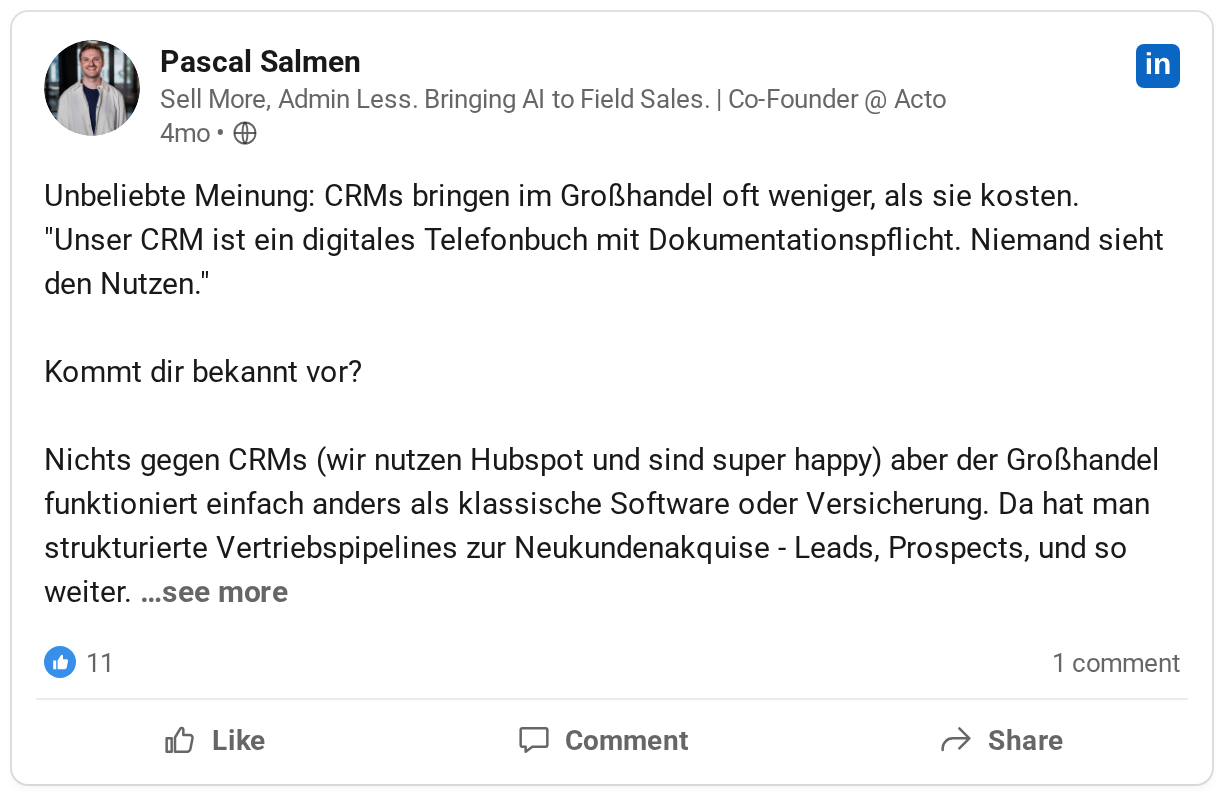
The CRM concept emerged in industries such as software, telecommunications and insurance, whose sales turn leads into deals. Wholesale adopted it even though its business runs on ordering rhythms, assortment gaps and repurchases. Field sales enter visit reports and get nothing back for it.
Our interview analysis makes this clear: in 49% of 182 conversations with wholesalers, the CRM is barely used or not used at all in field sales (in German), and well used in only 8% (2024 to 2026, not representative).
"We've really not used Salesforce to our advantage at all for years, only as pure documentation that costs time."
– Sales director, B2B coffee and vending provider, customer conversation, 2026
In smaller companies we often hear that order entry in the ERP is effectively the CRM. And where the market is stagnating (the BGA expects nominal wholesale revenue growth of 1.2 percent and real growth of only 0.7 percent for 2026, according to the BGA forecast), the fastest lever lies in your own existing customer base.

How did we evaluate the systems?
We measure each system by whether it relieves field sales in the existing-customer business and shows which customers need attention now. The basis is our conversations with wholesalers, public user reviews and vendor websites; we have not run our own long-term tests of the competitors. We deliberately don't compare prices: list prices say little about the total cost of a CRM. The user feedback is not equally complete for all systems: for Salesforce there is a documented user criticism, for SAP a user praise, for Dynamics an aggregated rating and for HubSpot aggregated ratings plus one user criticism. Documented user praise and criticism are therefore not available for every system.
- Existing-customer focus: Does the system prioritize, or does it only document?
- Effort for field sales: How much has to be typed, and where is the system used?
- Integration with ERP and Outlook, rollout and acceptance in the team.
Which system fits which need? The comparison
Salesforce suits complex pipelines, Dynamics 365 Sales Microsoft shops, SAP Sales Cloud SAP-centric businesses, HubSpot an inexpensive start, and Acto proactive existing-customer care.
| System | Best for | What sets it apart |
|---|---|---|
| Salesforce Sales Cloud | complex pipelines in larger companies | highly configurable, large app ecosystem |
| Microsoft Dynamics 365 Sales | companies in the Microsoft environment | close to Outlook and Teams |
| SAP Sales Cloud | SAP-centric organizations | direct integration with SAP orders and terms |
| HubSpot | getting started and new-customer acquisition | free basic version, easy to use |
| Acto | existing-customer care in wholesale | prioritizes customers from ERP data, visit report by voice into the CRM |
Salesforce Sales Cloud
Salesforce Sales Cloud is a highly configurable platform for teams that guide opportunities through multi-stage processes. For wholesalers with their own project or key account business, it maps complex, pipeline-driven processes.
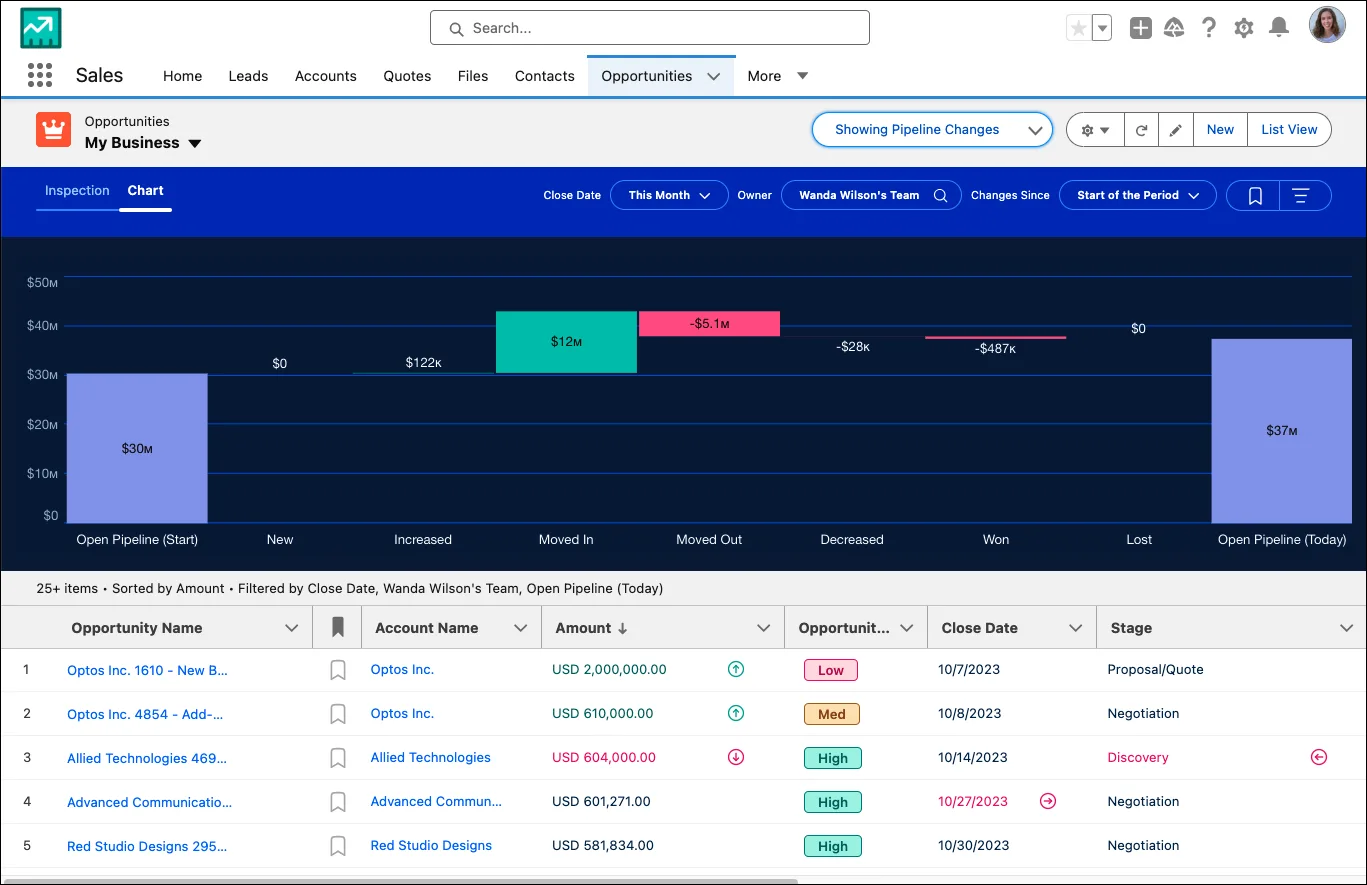
Core functions include pipeline management, forecasting, workflow automation, the AI features of Agentforce and the AppExchange app marketplace. Its strength lies in its configurability and broad ecosystem.
Possible weaknesses: Rollout and customization often require external consulting. One reviewer on the AWS Marketplace calls the product too expensive for its value and hard to use, especially for changes and reports (January 2026). In conversations with larger wholesalers, we often see Salesforce used as a documentation system.
Best if you want to map complex, pipeline-driven sales processes with many stakeholders and have a budget for rollout and support.
Microsoft Dynamics 365 Sales
Dynamics 365 Sales is Microsoft's CRM and sits close to Outlook, Teams and Microsoft 365. If your company works there anyway, you use the integration with Outlook and Teams for customer data.
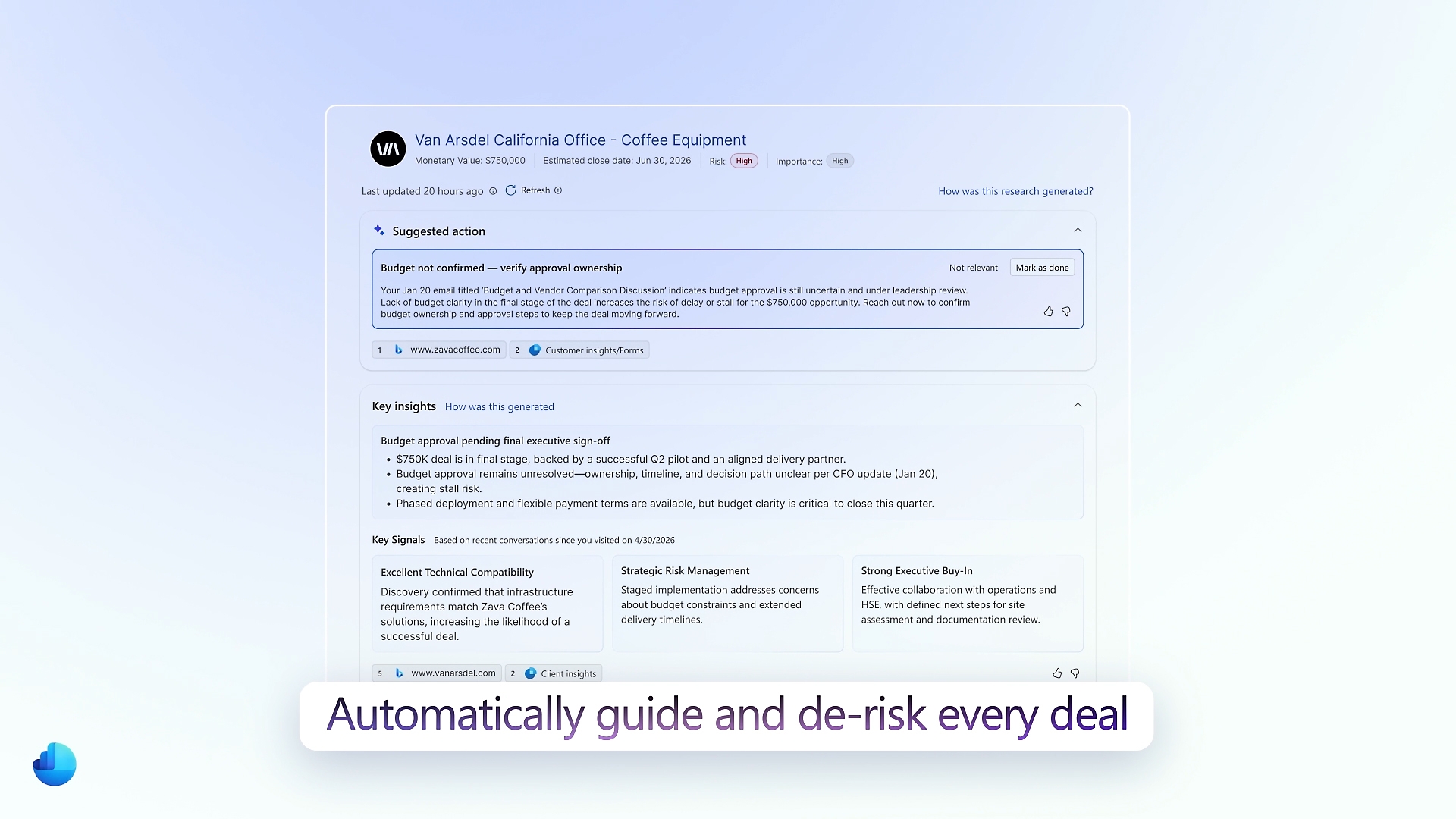
Core functions are lead and opportunity management, the Copilot assistant, the Sales Accelerator and the connection to LinkedIn Sales Navigator. Its strength lies in its proximity to the tools field sales use every day.
Possible weaknesses: Copilot features and forecasting are only available in higher editions, and one overview cites 3.8 out of 5 points on G2 from over 1,600 reviews. Rollout usually requires an implementation partner.
Best if your company lives in Microsoft 365 and sales and inside sales should share the same interface.
SAP Sales Cloud
SAP Sales Cloud is the sales solution for companies whose orders, prices and terms already sit in SAP. Data from S/4HANA or ECC can be connected via the integration.
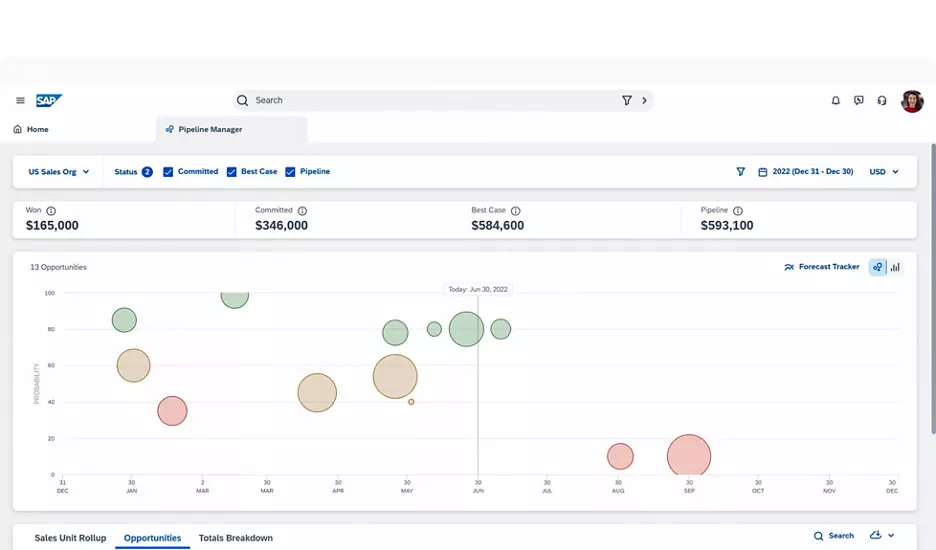
Core functions are lead and opportunity management, quote and contract management, and integration with S/4HANA and ECC. An SAP consultant highlights how easily salespeople create leads and how direct the connection to S4 or ECC is.
Possible weaknesses: The pricing model is geared toward large corporations, and the implementation effort is high, which deters smaller teams.
Best if your processes are SAP-centric and sales should access terms and order data directly.
HubSpot
HubSpot has the lowest barrier to entry: the basic version is free, and the pipeline and interface are quickly understood. We use HubSpot in our own sales and are happy with it, because our business has a new-customer pipeline. That very logic doesn't hold in wholesale.
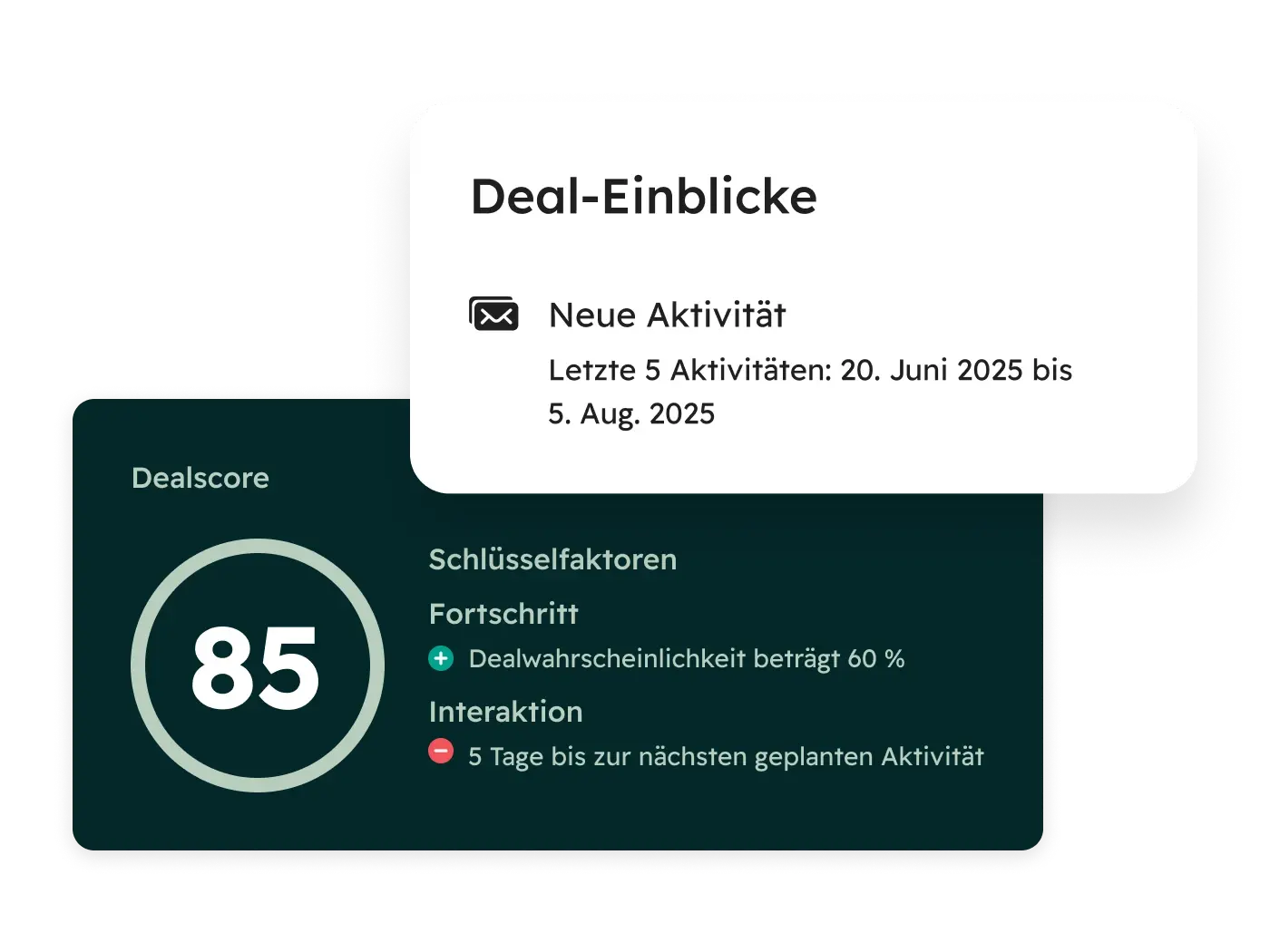
Core functions are the deal pipeline, email sequences, reporting, the Breeze AI assistant and the connection to marketing and service. On G2, HubSpot scores 4.4 out of 5, on Capterra 4.5 and on OMR Reviews 4.3 (2026 analysis).
Possible weaknesses: The cost jump to Professional and Enterprise is significant, and external data such as ERP orders is hard to connect. One reviewer on OMR Reviews describes getting started like this: "The HubSpot Sales Hub can be quite overwhelming at first... If you try to learn the system on the side, you quickly lose track."
Best if you are starting with a small budget and mainly want to win new customers.
Acto: the alternative to a CRM built for wholesale
Acto is AI sales software for wholesale. It analyzes order data from ERP and CRM and tells field sales which customers need a visit or call this week and what to talk about. Acto does not manage a new-customer pipeline. Larger wholesalers embed Acto as a sidebar in their existing CRM and also use it in Outlook. Smaller sales organizations that want to work lean use Acto instead of a CRM.
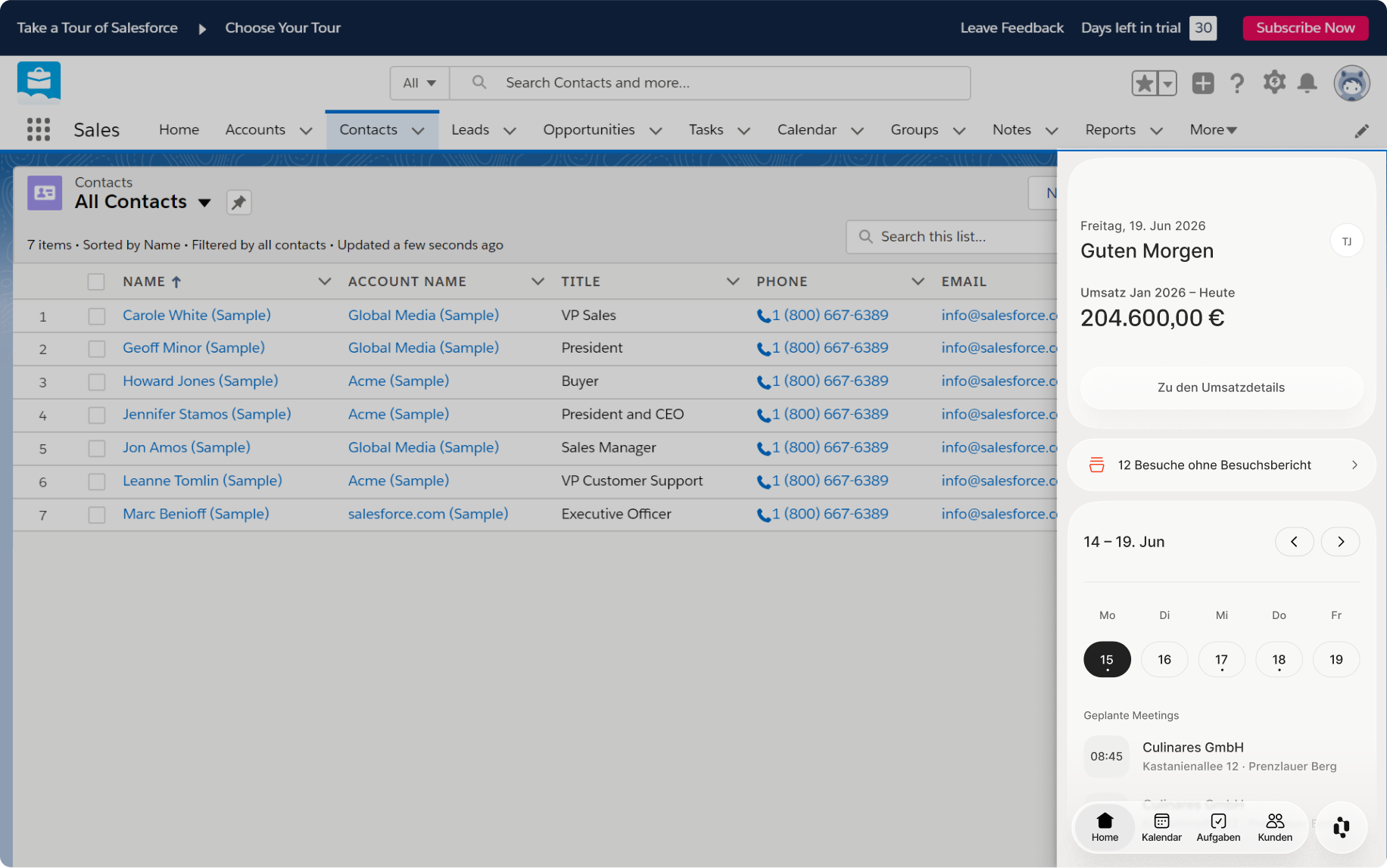
The signals appear as a sidebar right where sales already works.
Acto compares each customer's revenue over 1, 3 and 6 months and the usual ordering interval per customer and item. If a customer normally orders a product every three months, for example, and hasn't after four months, that becomes an alert. Field sales record the visit report by voice in the car after the appointment, and this produces notes and tasks in the CRM (how Voice-to-CRM works).
- Daily prioritization by churn risk, due repurchase and cross-sell potential
- Conversation preparation via app or voice, even while driving
- Sidebar in Salesforce, Dynamics, SAP and Outlook, plus a mobile app
Strengths: Acto is built for wholesale logic with many items and existing customers and runs in the tools the team already uses. At the office supplies wholesaler Plate, revenue among users in the pilot team rose by 10%, and the time between orders fell by 35%. At Schäfer Shop, sales marks 92% of the signals as helpful. In our published reference projects, the revenue increase ranged from 5.4% (Hitado, pilot group) to 11.2% (Schäfer Shop).
Possible weaknesses: Acto does not replace master data management and has neither lead scoring nor marketing automation. Its recommendations are only as good as the data in the ERP. We have not found public user reviews on the major platforms.
Rollout: Acto connects to the existing ERP. It usually takes four to six weeks to go live, depending on system landscape and data quality, and IT is occupied for two to three days.
Best if your field sales team looks after hundreds of existing customers, you don't want to introduce yet another input form, and your CRM should stay, or never come in the first place.
What does wholesale require of a CRM?
A system for wholesale has to prioritize existing customers, read the item and order logic from the ERP and run where field sales work: in the car, on the phone, in Outlook. Pipeline functions are secondary here.
By simple arithmetic, a field sales rep in wholesale, at around six visits a day and 176 field days, makes around 1,000 visits a year. That means they see each of their 247 customers about four times a year (in German), and with the median of 175 customers just under six times (own calculation from the Acto study). Anyone who drives to customers on a fixed rotation with four contacts a year often only turns up once a customer with an ordering pause is already buying elsewhere.
Even so, planning is mostly done from memory: in 47% of 186 conversations, wholesalers plan visits by gut feeling or experience (in German), and only 8% with the CRM, so six times as often (2024 to 2026, not representative, multiple answers possible). That's not the team's fault, because nobody works out needs across tens of thousands of items on the side. Yet, depending on the industry, according to the Harvard Business Review (Gallo, 2014), winning a customer costs five to 25 times as much as keeping an existing one.

Then there is the knowledge in people's heads. According to our study, 73% of field sales reps in wholesale have more than ten years of professional experience (in German) (profile sample, 177 field sales reps, as of calendar week 40/2026, not representative), and according to the Federal Employment Agency's 2025 skilled labor shortage analysis (Fachkräfteengpassanalyse 2025), a position for wholesale and foreign trade clerks takes a median of 85 days to fill (2024: 93).
Acceptance is the last hurdle. Sales software is bought in the office and used in the car, and field sales experience every additional mandatory input form as being told what to do (why visit reports are barely used). You can find more conversations about sales work in wholesale and direct sales in the Revenue Signals Podcast.
Where do the big CRM vendors win?
The big CRMs win wherever processes, pipeline and master data are at the center. Salesforce maps complex sales processes and can be extended via its ecosystem. Dynamics scores with its Microsoft integration, SAP with its proximity to orders and terms, HubSpot with usability and entry price.
Acto doesn't win there. For new-customer pipelines, marketing automation and clean maintenance of contact data, the CRMs are the better choice.
Not for you: when an existing-customer tool is not the answer
If your business is truly pipeline-driven, for example project business with a long new-customer lead time, a classic CRM is the better foundation. With a small customer base that two field sales reps keep in their heads, systematic prioritization is hardly worthwhile.
If the ERP data is patchy, for example without clean product groups or customer assignment, no analysis delivers usable alerts. And if the team doesn't want to support change, even the best tool won't solve the problem.
Conclusion: which system fits whom?
The right question before any CRM project is: what role should our CRM play in five years, and where does the revenue contribution it doesn't deliver today come from? In our view, a CRM in wholesale often delivers less than it costs as long as it only lets field sales document.
| Your need | Suitable choice |
|---|---|
| complex, pipeline-driven processes | Salesforce Sales Cloud |
| working in Outlook and Teams | Microsoft Dynamics 365 Sales |
| SAP-centric systems | SAP Sales Cloud |
| inexpensive start, new-customer focus | HubSpot |
| proactively look after existing customers, little input | Acto, as a sidebar in the CRM or without a CRM |
Acto does not necessarily replace the CRM; the two can be combined. You can find more on the topic in the guide to wholesale sales and on data-based existing-customer management.
How to implement existing-customer care with Acto
Acto reads the data from your ERP and CRM and gives field sales a short list every morning of the customers who need attention now. In a conversation, we clarify which data sources you have and how Acto fits into your field sales routine.
- Prioritize customers by ordering pause, revenue decline and assortment gap
- Prepare conversations via app or voice in the car
- Record visit reports by voice; notes and tasks land automatically in the CRM
Frequently asked questions
Is a regular retail CRM also suitable for wholesalers?
For contacts, pipeline and documentation, yes. For the question of which of hundreds of existing customers is currently ordering less or no longer buys a product group, you need an analysis of the ERP data. That is exactly what a standard CRM delivers only with a lot of manual effort.
Are SAP and CRM the same thing?
No. The ERP, such as SAP S/4HANA, is the source for orders, prices, inventory and terms. A CRM manages contacts and sales activities; SAP offers its own product for this with SAP Sales Cloud.
What do I do if my field sales team simply doesn't maintain the CRM?
First check what field sales get back for maintaining it. Anyone who only supplies data but gets no tips for the next visit won't type. Voice input after the appointment and concrete recommendations change the ratio of effort to benefit.
Which CRM has the best mobile app for field sales?
All four big CRMs in this comparison offer mobile apps. For field sales, though, what matters is less the app itself than a few everyday questions: can I record by voice after the appointment instead of typing? Does the app tell me in the morning which customers are due today? And does my team use it in the car without anyone demanding it? Test this with three field sales reps for a day in the territory, not in the demo. Acto comes with its own app for iOS, Android and web and can be operated by voice.
Can I use Acto in addition to my CRM?
Yes. Acto runs as a sidebar in Salesforce, Dynamics, SAP and Outlook and writes visit reports back to the CRM as notes and tasks. Some wholesalers also use Acto entirely without a CRM.